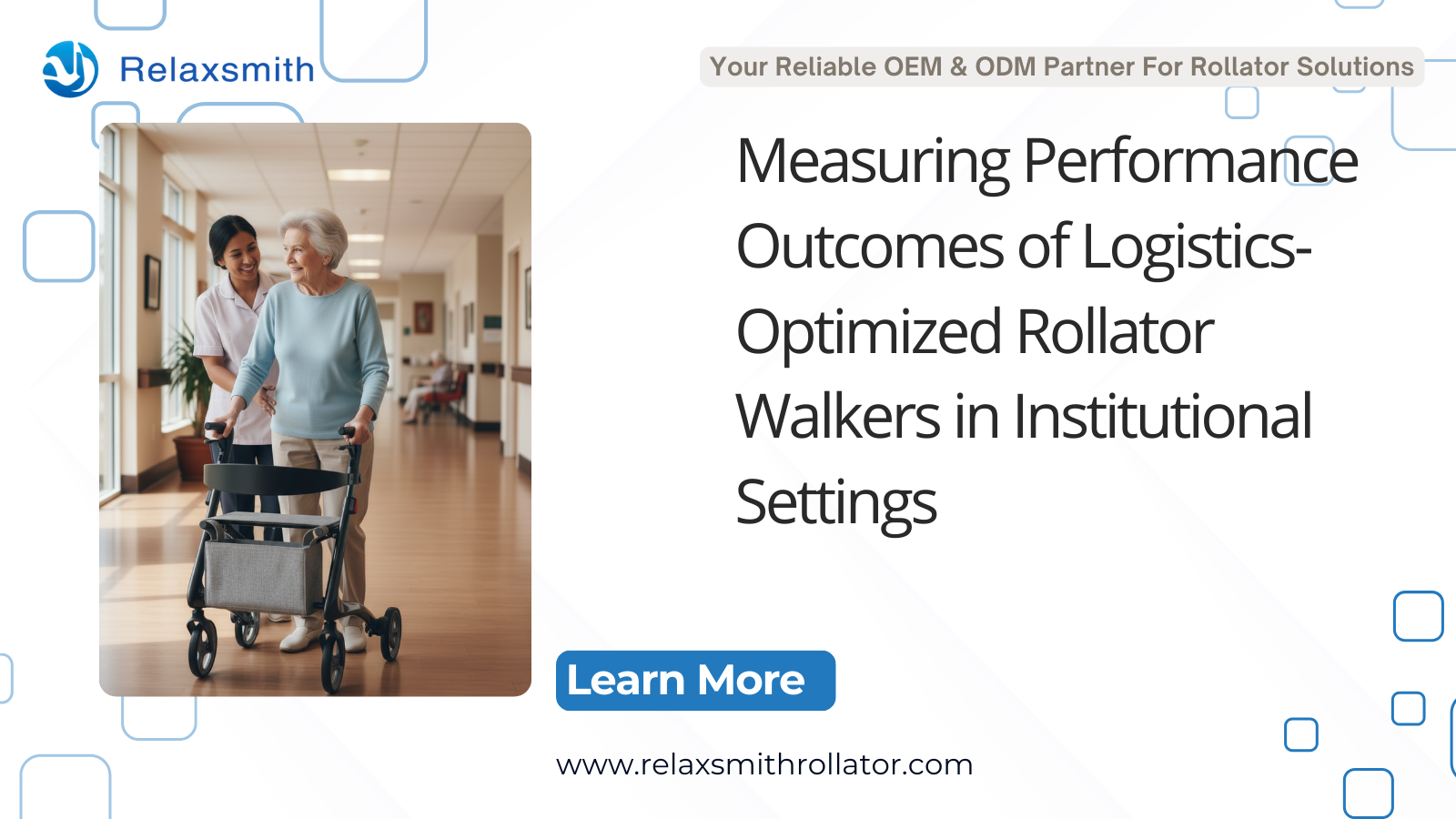
Measuring Performance Outcomes of Logistics-Optimized Rollator Walkers in Institutional Settings
Institutional buyers, supply chain leaders, and clinicians increasingly require data-driven validation of their purchasing decisions. For logistics-optimized rollator walkers, measuring real-world performance outcomes is critical for justifying procurement, optimizing care, and driving continuous improvement. This article provides a roadmap for capturing, analyzing, and acting on performance data in institutional environments.
Defining Performance Metrics
Start with clear, measurable criteria: device uptime, patient mobility outcomes, assembly and maintenance times, and logistics efficiency (such as storage density and shipping frequency). For logistics-optimized rollator walkers, track how modular design, flat-pack shipping, and standardized parts affect operational KPIs across the facility.
Clinical and User Impact
Gather user feedback through surveys and incident reporting, tracking comfort, satisfaction, and safety incidents. Assess how logistics-optimized rollator walkers affect patient independence, falls reduction, and length of stay. Analyze trends in maintenance requests and device swap rates to identify areas for product or process improvement.
Supply Chain and Cost Efficiency
Evaluate logistics-optimized rollator walkers in terms of storage requirements, delivery lead times, and cost-per-use. Cross-reference these metrics with warranty claims and repair turnaround times to quantify the total cost of ownership and justify future procurement strategies.
Data Collection and Reporting Best Practices
Implement routine audits, digital tracking, and centralized reporting platforms. Share findings across departments to promote transparency and foster collaborative improvement. Supplier partnerships should include clear mechanisms for data exchange and joint performance reviews.
Continuous Improvement and Innovation
Use performance data to inform new tender specifications, supplier negotiations, and training programs. Feedback loops between clinical, supply chain, and procurement teams enable continuous refinement of product selection and deployment strategies.
Summary
Measuring the performance outcomes of logistics-optimized rollator walkers enables institutions to maximize value, enhance care quality, and build a data-driven culture of continuous improvement. With the right metrics and reporting structures, procurement and clinical leaders can confidently advocate for best-in-class mobility solutions.
SEO Keywords
| logistics-optimized rollator walker | performance metrics mobility aid |
| clinical outcomes rollator | institutional KPI walker |
| total cost of ownership walker | patient satisfaction mobility |
| uptime analysis rollator | device maintenance data |
| modular design outcome | user feedback procurement |
| digital reporting walker | continuous improvement mobility |
| supply chain efficiency rollator | warranty claim analysis |
| storage density walker | incident reporting rollator |
| repair turnaround mobility aid | lead time procurement |
| survey analysis walker | operational KPI mobility aid |
| clinical audit rollator | procurement reporting walker |
| patient independence data | falls reduction mobility |
| supplier review walker | device swap rate analysis |
| best-in-class mobility aid | centralized data walker |
| joint performance review | training program procurement |
Tags
| performance metrics | clinical outcomes |
| KPI | modular design |
| total cost | satisfaction |
| digital reporting | data analysis |
| continuous improvement | incident reporting |
| warranty | feedback loop |
| audit | lead time |
| repair turnaround | best-in-class |
| joint review | training program |
| institutional procurement | logistics-optimized |
For more details, please visit: www.relaxsmithrollator.com