





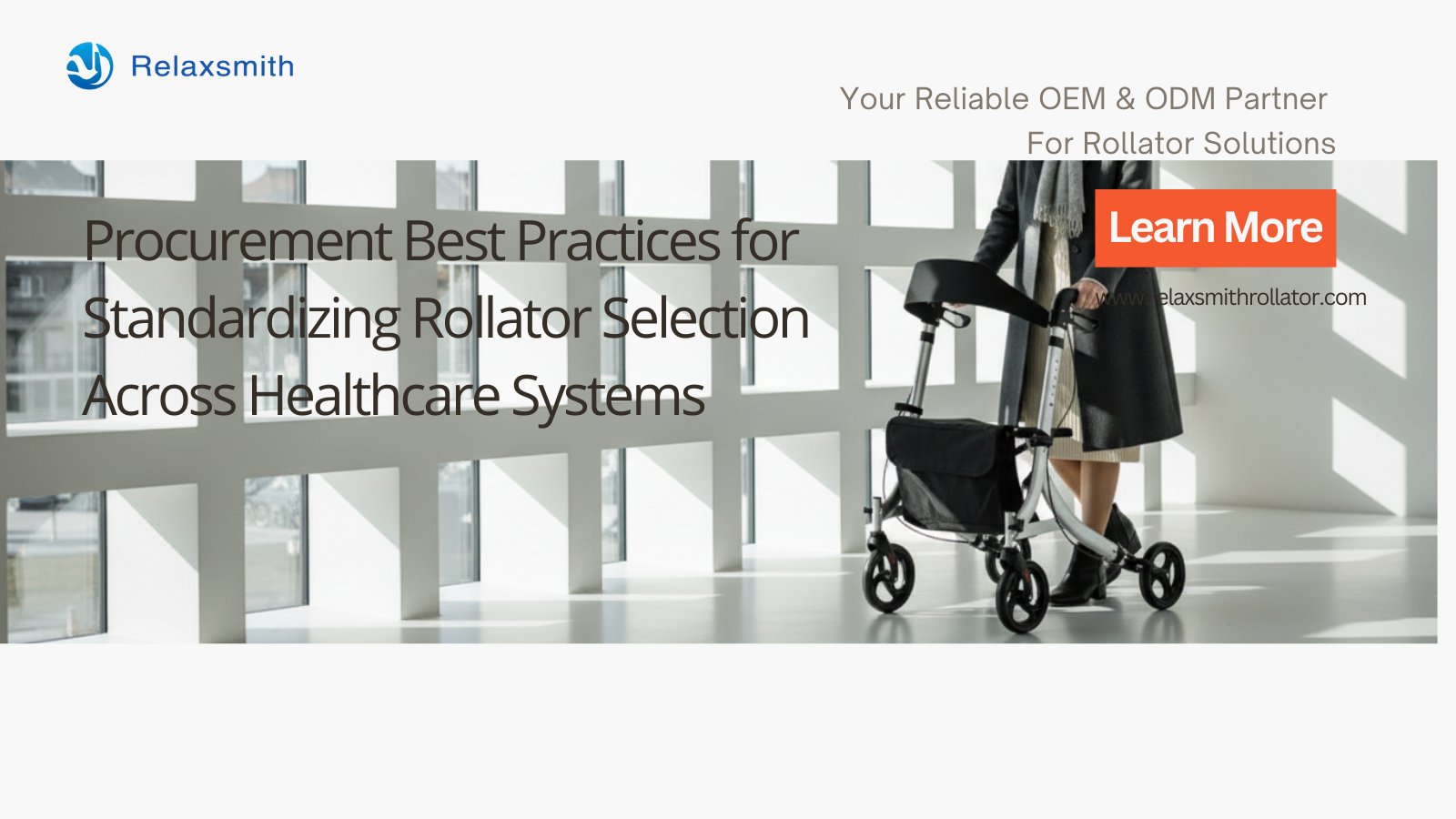
Procurement Best Practices for Standardizing Rollator Selection Across Healthcare Systems
This article explores procurement best practices for standardizing rollator selection across healthcare systems, focusing on factors such as cost, quality, user needs, and long-term sustainability. Standardization ensures consistency, quality, and cost-effectiveness in providing mobility aids for patients across various healthcare settings, including hospitals, nursing homes, and rehabilitation centers.
Why Standardization Matters in Rollator Procurement
Standardizing rollator selection across healthcare systems is essential for several reasons:
Consistency in Quality — Standardization ensures that all patients receive the same high-quality products, improving patient outcomes and satisfaction.
Cost-Efficiency — Purchasing rollators in bulk or through a standardized procurement process often results in cost savings, making it easier to stay within budget while ensuring high-quality equipment.
Ease of Maintenance and Support — Standardized rollators are easier to maintain, as staff are familiar with a single model or brand, and spare parts are easier to source.
Improved Training for Staff — Healthcare providers can focus their training on one model, which ensures more effective and consistent use across different facilities and by different staff members.
Key Factors to Consider When Standardizing Rollator Selection
When standardizing rollator selection across healthcare systems, procurement teams must consider several key factors:
User Needs — The rollator must be suitable for various patient needs, from those requiring basic support to those needing additional features such as ergonomic handles or enhanced stability.
Durability and Quality — The rollators must be durable enough to withstand frequent use and last for extended periods, with high-quality materials that are easy to clean and maintain.
Compliance with Health and Safety Standards — All rollators must comply with relevant safety and regulatory standards, ensuring that they are safe to use and appropriate for healthcare environments.
Cost-Effectiveness — While quality is paramount, procurement teams must also ensure that rollators are affordable. Standardizing the selection process can help reduce costs through bulk purchasing and long-term agreements with suppliers.
Adjustability and Customization — Rollators should be adjustable to accommodate patients of different heights and physical conditions. Customizable features ensure that each patient can have a rollator that meets their specific needs.
Steps to Implement a Standardized Rollator Procurement Process
Implementing a standardized procurement process involves several steps:
Assess Patient Needs — Begin by assessing the specific needs of patients across different facilities. Determine the most common requirements for mobility aids, including weight capacity, adjustability, and additional features.
Identify Supplier Options — Research suppliers that provide rollators meeting the healthcare system’s requirements. Look for suppliers who offer warranties, after-sale support, and the ability to deliver consistent products.
Evaluate and Test Products — Before finalizing procurement, it’s essential to evaluate and test various rollator models. Ensure that the selected models meet durability, comfort, safety, and ease-of-use standards.
Negotiate Pricing and Contracts — Leverage bulk purchasing to negotiate the best prices with suppliers. Consider long-term contracts or leasing options to further reduce costs.
Train Healthcare Staff — Once rollators are selected, ensure that healthcare staff are properly trained on their use and maintenance. This ensures that rollators are used effectively and safely across the healthcare system.
Challenges in Standardizing Rollator Procurement
While standardizing rollator procurement brings many benefits, it also presents challenges that procurement teams must address:
Diverse Patient Needs — Different patients may require different features, such as extra-wide seats or specialized grips. Balancing these needs with a standardized model can be challenging, but it’s important to select a rollator with a variety of features to accommodate a wide range of patients.
Supplier Diversity — Relying on a single supplier may limit options. However, procuring from multiple suppliers can complicate logistics and quality control. Procurement teams must weigh the pros and cons of each approach.
Adapting to Technological Advancements — Rollator designs and technologies continue to evolve. Healthcare systems need to ensure that their procurement strategies allow for flexibility and the inclusion of new innovations over time.
Best Practices for Procurement Teams
To maximize the benefits of standardized rollator procurement, procurement teams should follow these best practices:
Collaborate with Healthcare Providers — Engage healthcare providers in the decision-making process to ensure that the selected rollators meet the needs of patients and staff alike.
Monitor Usage and Feedback — Regularly monitor the performance and usage of rollators across healthcare systems. Collect feedback from staff and patients to make adjustments or changes as needed.
Review Contracts and Supplier Relationships — Regularly review contracts with suppliers to ensure that rollators are consistently meeting quality standards and that pricing remains competitive.
Focus on Long-Term Value — Instead of focusing solely on initial costs, consider the long-term value of the rollators, including maintenance, durability, and improved patient outcomes.
Conclusion: Optimizing Rollator Procurement Across Healthcare Systems
Standardizing rollator procurement across healthcare systems can greatly improve the quality of care for patients while reducing costs. By focusing on the key factors of patient needs, durability, safety, and cost-effectiveness, procurement teams can select the best rollators for their systems. Implementing a streamlined procurement process ensures that healthcare providers can deliver consistent, high-quality care to all patients in a cost-efficient manner.



