



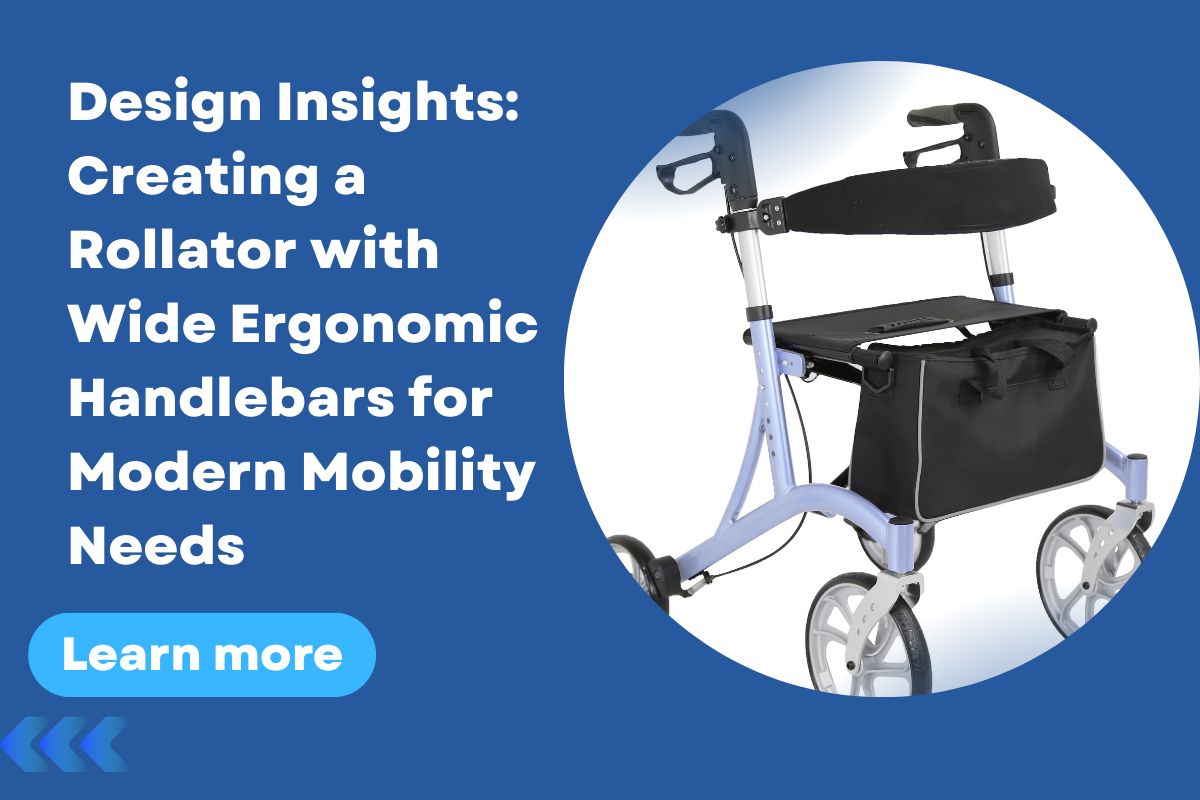
Procurement Considerations for Walker with Detachable Seat Cushion: Easy to Clean and Maintain
Procurement in healthcare institutions is a sophisticated process that requires balancing multiple priorities: safety, hygiene, compliance, cost-effectiveness, and patient satisfaction. Unlike consumer purchases, institutional procurement decisions affect thousands of patients and staff members, and they carry significant operational and reputational implications. Among mobility aids, walkers are a critical category of equipment that are used daily in hospitals, eldercare facilities, and rehabilitation centers. The Walker with Detachable Seat Cushion: Easy to Clean and Maintain offers procurement professionals a compelling solution that addresses hygiene, efficiency, and lifecycle value.
1. Aligning with Hygiene and Safety Standards
Healthcare environments must adhere to strict hygiene standards. Traditional walkers with fixed cushions present cleaning challenges, often trapping bacteria, fluids, and debris. Such issues increase the risk of cross-contamination and regulatory non-compliance.
By contrast, the Walker with Detachable Seat Cushion: Easy to Clean and Maintain simplifies sanitation through a design that allows cushions to be removed, washed, and disinfected with minimal effort. Procurement managers who choose this walker reduce risks of audit failures, infection outbreaks, and patient complaints, all of which carry high financial and reputational costs.
2. Lifecycle Cost Considerations
Upfront cost is only one factor in procurement. A complete evaluation considers Total Cost of Ownership (TCO), which includes maintenance, replacement, labor, and risk-related expenses.
Detachable seat cushions reduce wear and tear because they can be replaced independently of the entire walker. This minimizes full-unit replacements, extends the lifespan of each walker, and reduces operational disruptions. Procurement managers who prioritize lifecycle costs instead of initial purchase prices benefit from predictable budgets and long-term savings.
3. Supplier Reliability and Regulatory Compliance
The quality of suppliers directly impacts procurement outcomes. Reliable suppliers not only deliver products on time but also ensure compliance with international and local standards, such as ISO certifications and healthcare safety guidelines.
Suppliers of the Walker with Detachable Seat Cushion: Easy to Clean and Maintain typically provide compliance documentation, warranties, and service support. Procurement managers gain confidence knowing that they are sourcing from vendors aligned with regulatory frameworks, which minimizes risks of penalties or recalls.
4. Operational Efficiency in Procurement
Operational efficiency is a core procurement goal. Traditional walkers often require add-on accessories or additional sanitation products, complicating supply chain processes. By contrast, the detachable cushion walker integrates hygiene features directly into its design, eliminating the need for separate SKUs and reducing warehouse complexity.
Simplified logistics mean fewer purchase orders, optimized inventory, and faster fulfillment processes. For institutions managing large procurement volumes, such efficiency translates into substantial cost savings and streamlined workflows.
5. Cross-Department Value Creation
Procurement professionals must also consider how product choices impact other departments. A hygiene-friendly walker provides benefits across institutional functions: Caregivers save time cleaning and can focus on patient care. Warehouse staff handle standardized products with fewer SKUs. Administrators achieve stronger compliance scores during audits.
By selecting the Walker with Detachable Seat Cushion: Easy to Clean and Maintain, procurement professionals indirectly improve institutional performance across multiple departments.
6. Digital Procurement and Data-Driven Decisions
In modern healthcare systems, procurement is increasingly digitized. Products with measurable performance outcomes—such as reduced incident reports or lower return rates—generate valuable procurement data.
Adopting this walker allows institutions to track hygiene-related improvements and correlate them with patient satisfaction scores. Such data supports procurement professionals in negotiating contracts, justifying purchases to stakeholders, and improving supplier evaluations.
7. Risk Mitigation and Insurance Savings
Healthcare institutions face significant liability risks from preventable accidents or hygiene-related incidents. Insurance providers assess institutional risk profiles when determining premium rates.
By procuring hygiene-focused walkers, institutions demonstrate proactive risk management. The Walker with Detachable Seat Cushion: Easy to Clean and Maintain reduces infection risks, strengthens compliance, and supports a safer care environment. Over time, these improvements may contribute to reduced insurance premiums and lower risk management costs.
8. International Procurement and Standardization
For multinational healthcare groups, standardization is a priority. Managing multiple product lines across regions increases complexity and costs. The detachable cushion walker offers a design that is universally relevant, as hygiene and ease of maintenance are critical in all healthcare systems.
By adopting a globally adaptable product, procurement managers streamline supplier relationships, achieve economies of scale, and simplify training for staff across different locations.
9. Patient Confidence and Institutional Reputation
Procurement decisions ultimately affect patient perception. Patients and families notice whether institutions prioritize hygiene and comfort. Walkers with detachable, easy-to-clean cushions signal a visible commitment to cleanliness, directly influencing patient trust.
Hospitals and eldercare centers that invest in such equipment build stronger reputations. This can lead to improved patient satisfaction scores, better public reviews, and enhanced competitiveness in healthcare markets.
10. Case Example: Procurement Impact
Consider a large eldercare facility that manages 500 mobility aids. Before switching, they used walkers with fixed cushions, requiring intensive labor for cleaning and frequent replacements. By transitioning to the Walker with Detachable Seat Cushion: Easy to Clean and Maintain, they: Reduced cushion replacement costs by 40% annually. Cut cleaning labor time by 25%. Improved compliance scores during hygiene audits. Increased patient satisfaction scores related to cleanliness by 15%.
This case highlights how procurement professionals can drive measurable institutional improvements by selecting the right equipment.
Conclusion
For procurement professionals, the Walker with Detachable Seat Cushion: Easy to Clean and Maintain is far more than a piece of mobility equipment. It is a procurement strategy that supports hygiene compliance, reduces lifecycle costs, strengthens supplier relationships, enhances cross-department efficiency, and improves patient trust.
By prioritizing products that combine innovation and practicality, procurement managers secure long-term institutional value, reduce risks, and elevate patient care outcomes. In an era where healthcare systems are under constant scrutiny, such forward-thinking procurement choices make the difference between short-term savings and long-term success.
40 SEO Keywords
walker procurement strategy, walker with detachable cushion procurement, easy-to-clean walker procurement, walker procurement compliance, walker procurement efficiency, walker institutional procurement, walker supplier compliance, walker lifecycle cost analysis, walker procurement for hospitals, walker procurement for eldercare, walker procurement decision-making, walker procurement best practices, walker procurement logistics, walker procurement cost efficiency, walker procurement long-term value, walker procurement hygiene compliance, walker procurement innovation, walker procurement checklist, walker procurement savings, walker procurement durability, walker procurement patient safety, walker procurement benefits, walker procurement and suppliers, walker procurement standards, walker procurement and compliance, walker procurement performance, walker procurement institutional savings, walker procurement lifecycle cost, walker procurement design standards, walker procurement healthcare focus, walker procurement simplified logistics, walker procurement quality assurance, walker procurement with visibility features, walker procurement staff efficiency, walker procurement and maintenance, walker procurement alignment with safety, walker procurement institutional performance, walker procurement value-added strategy, walker procurement reliability assessment, walker procurement compliance assurance
READ MORE:
- How Walker with Detachable Seat Cushion Improves Hygiene in Healthcare
- Improving Supply Chain Efficiency with Rollator with High-Visibility Accents
- Procurement Considerations for Rollator with High-Visibility Accents
- How Rollator with High-Visibility Accents Improves User Confidence in Healthcare
- Design and Safety Insights: Why Rollator with High-Visibility Accents Matters to Product Managers
- Cost-Benefit Analysis of Rollator with High-Visibility Accents in Institutional Purchases
- Future Trends in Rollators with Reflective Wheel Rims: Enhancing Nighttime Safety through Innovation
- Optimizing Supply Chains for Rollators with Reflective Wheel Rims: Efficiency and Reliability
- Design Considerations for Rollators with Reflective Wheel Rims: Balancing Safety and Portability