





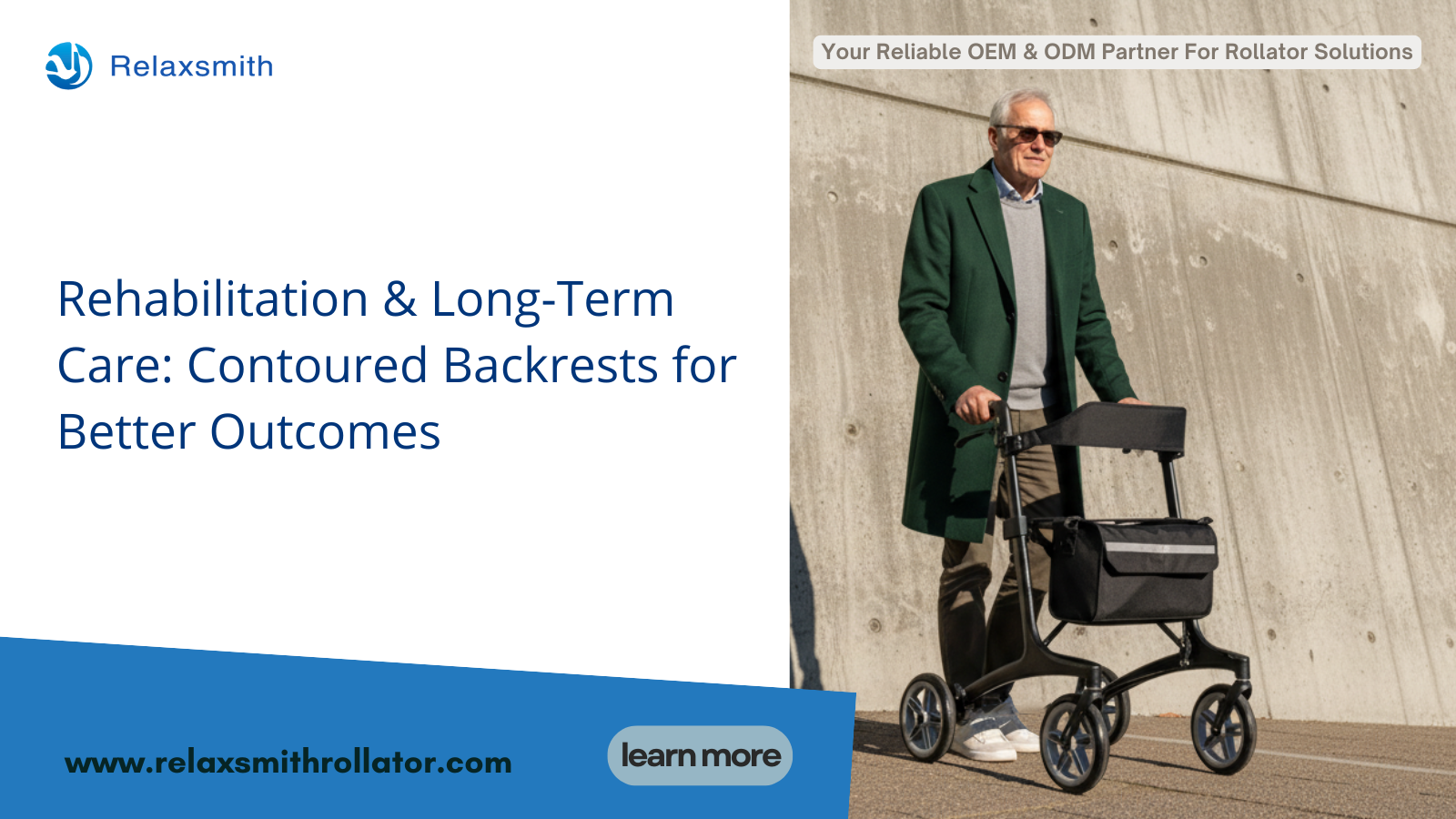
Rehabilitation & Long-Term Care: Contoured Backrests for Better Outcomes
The demand for mobility aids in rehabilitation and long-term care settings continues to rise. Within this context, the rollator with contoured backrest is becoming a gold standard for enhancing user comfort, reducing complications, and supporting patient progress. This article outlines key considerations and best practices for integrating contoured backrests into institutional care and procurement strategies.
1. Supporting Post-Acute Recovery
During rehabilitation, a rollator with contoured backrest offers stable, anatomically appropriate support, making it easier for patients to regain mobility and confidence after surgery or illness. Its ergonomic design helps prevent muscle strain, pressure injuries, and poor posture, all of which are common concerns in early recovery phases.
2. Managing Chronic Conditions with Comfort
Long-term care patients often have complex needs. A rollator with contoured backrest delivers sustained comfort during prolonged use, facilitating social participation and independence. Adjustable supports and removable covers allow staff to tailor devices for each patient’s medical and comfort requirements.
3. Clinical Integration and Staff Training
Successful adoption of rollator with contoured backrest models depends on effective clinical integration and staff education. Training programs should highlight proper adjustments, cleaning protocols, and user-specific configuration, ensuring both patient safety and device longevity.
4. Procurement & Inventory Best Practices
Procurement teams should work closely with clinical leaders to standardize on high-quality rollator with contoured backrest designs. Bulk purchasing can drive down costs, while inventory management systems track usage and maintenance, reducing losses and downtime.
5. Measuring Outcomes and Continuous Improvement
Ongoing monitoring of patient outcomes, comfort ratings, and complication rates helps organizations assess the impact of contoured backrests. Procurement and clinical leaders should collaborate on feedback loops and supplier evaluations to ensure continuous product improvement.



