





When Should You Choose a Cross-Brace Rollator? A Buyer’s Perspective
Mobility devices are evolving quickly, and today’s buyers—whether professional procurement teams or healthcare providers—have more choices than ever. One increasingly common question in sourcing meetings is: why do some rollators have a cross-brace frame, and when is it the right choice? In this guide, we’ll examine use cases, environmental demands, and cost-benefit angles to help buyers evaluate if and when a cross-brace rollator is the ideal investment.
1. Environments with Heavy Daily Usage
Long-term care facilities, rehabilitation clinics, and high-turnover hospitals put intense stress on mobility aids. The daily rigors of movement over thresholds, into elevators, or across uneven flooring can wear out traditional models quickly. Some rollators have a cross-brace frame precisely because it can better absorb and distribute load stress in these settings—meaning less downtime and repair.
2. Patient Profiles That Demand Stability
Patients recovering from strokes, dealing with balance disorders, or managing Parkinson’s often require equipment that doesn't just assist with mobility but ensures confidence. The extra rigidity provided by a cross-brace improves side-load resistance and prevents frame sway. This makes such models ideal for users needing maximal stability during rehabilitation sessions or independent mobility.
3. Storage Constraints and Vertical Folding Benefits
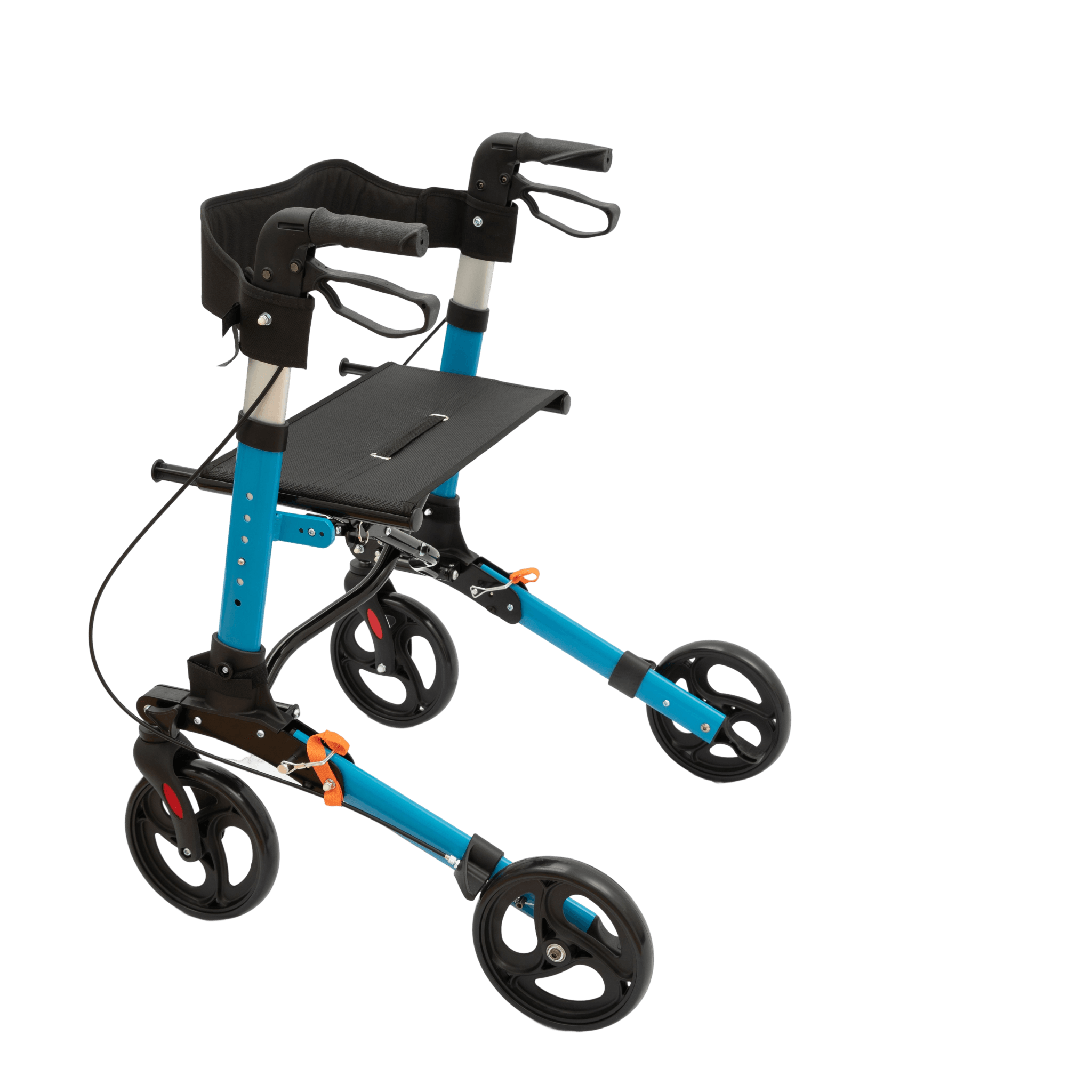
One key reason some rollators have a cross-brace frame is to facilitate vertical folding, making storage and transport significantly easier. For facilities with limited equipment rooms or for mobile care units operating in compact vehicles, the ability to fold upright without collapsing sideways provides a major operational advantage.
4. Return on Investment Over Time
Although cross-brace rollators may carry a slightly higher upfront price, their extended lifespan and lower service needs often offset this difference. Buyers must assess not just the purchase price but the cost per use over months or years. In bulk purchasing scenarios, this distinction can translate to tens of thousands in avoided replacements.
5. When It May Not Be Necessary
Not every use case demands a cross-brace. For instance, light-duty rollators used in outpatient follow-ups or travel applications may benefit more from ultra-lightweight frames or simpler designs. If the user base is low-frequency, ambulatory, and not dependent on constant rollator use, then side-folding models without cross-brace support could be more cost-effective.
Conclusion
Understanding why some rollators have a cross-brace frame is not just a matter of engineering—it’s a buying decision grounded in usage patterns, user needs, and long-term ROI. For buyers in professional healthcare and facility management roles, knowing when to prioritize structural integrity over simplicity can shape both outcomes and budgets. Cross-brace rollators offer enhanced stability, better foldability, and longer durability—features that are worth considering for high-demand use cases.