






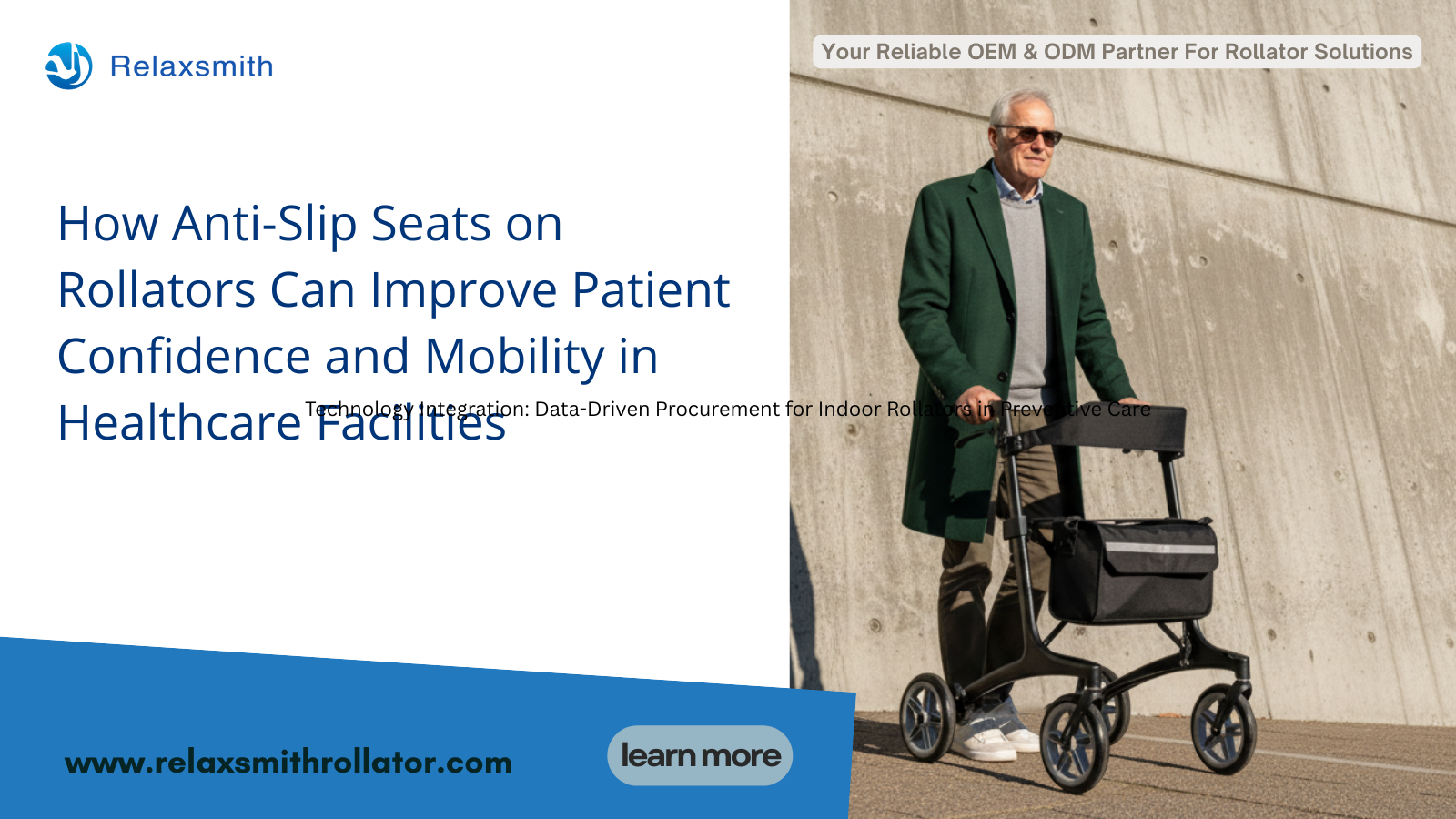
 How Anti-Slip Seats on Rollators Can Improve Patient Confidence and Mobility in Healthcare Facilities
For elderly patients and those with limited mobility, rollators are an essential tool to maintain independence and support physical mobility. However, patient confidence and mobility can be significantly influenced by the design of the rollator, especially the seating area. One critical feature in ensuring the comfort and security of patients is the incorporation of anti-slip seats on rollators. This article explores how anti-slip seats improve patient confidence and mobility, making healthcare environments safer and more supportive.
Why Anti-Slip Seats Matter in Healthcare
The primary function of a rollator is to provide support for walking, but many patients also need to take breaks during their walks. The seating area on rollators offers a convenient place for patients to rest. However, if the seat is slippery, patients may feel unsafe or uncomfortable sitting down or getting up. This can result in hesitancy to use the rollator, further limiting mobility and independence. Anti-slip seats are specifically designed to reduce this risk, providing a stable and secure place for patients to sit. This simple addition improves overall patient safety and confidence.
Improving Confidence in Patients
Confidence is a crucial factor in the mobility of elderly patients, particularly when using mobility aids like rollators. Patients who feel insecure or fear slipping off the seat are less likely to use their rollators regularly, which can negatively impact their overall mobility and independence. Anti-slip seats provide a stable and secure seating area, giving patients peace of mind as they sit and stand. This increased sense of security boosts confidence, making patients more willing to use their rollators more frequently and for longer periods.
Enhancing Mobility and Independence
When patients feel more confident using their rollators, they are more likely to engage in physical activities, which enhances their mobility. The design of the rollator’s seat plays an important role in this process. A non-slip seat encourages patients to sit when needed and transition from sitting to standing without fear of falling or losing their balance. This improves their ability to engage in daily activities and increases their sense of independence.
Additionally, regular use of a rollator with an anti-slip seat can help patients maintain or even improve their physical mobility over time. Increased use of mobility aids leads to better coordination, strength, and stability, all of which contribute to improved mobility and quality of life.
Reducing Fall Risks and Enhancing Patient Safety
Falls are a significant concern in healthcare settings, particularly for elderly patients who have a higher risk of injury. The transition from sitting to standing can be a precarious moment for patients using rollators. If the seat is slippery, patients are more likely to lose their balance and fall. Anti-slip seats reduce this risk by providing a stable surface for patients, making it easier and safer for them to transition between sitting and standing.
By preventing falls and ensuring that patients can sit and stand safely, anti-slip seats contribute to overall patient safety. This also reduces the likelihood of injury-related complications, which is particularly important for elderly patients who may already be dealing with fragile bones or other health issues.
Improving Healthcare Facility Efficiency
In addition to benefiting patients, anti-slip seats on rollators can enhance the efficiency of healthcare facilities. When patients use rollators with anti-slip seats, healthcare providers spend less time assisting patients with sitting and standing transitions, as the risk of falls is reduced. This allows healthcare staff to focus on other tasks, improving overall workflow and patient care. Furthermore, the reduction in fall-related incidents can lead to fewer medical interventions, resulting in cost savings for healthcare providers.
Comfort and Durability
Comfort is another important consideration in healthcare settings. Patients who are comfortable using their rollators are more likely to use them consistently. Anti-slip seats provide not only stability but also comfort, ensuring that patients can rest without discomfort. Many anti-slip seats are also designed with materials that are easy to clean and maintain, making them suitable for healthcare environments where hygiene is a top priority.
Conclusion
Anti-slip seats on rollators offer numerous benefits for elderly patients in healthcare settings. By improving patient confidence, enhancing mobility, reducing the risk of falls, and increasing healthcare efficiency, these seats are an essential feature of rollators. Healthcare facilities should prioritize rollators with anti-slip seats to ensure the safety, comfort, and independence of their patients. Investing in this simple but crucial feature will result in better patient outcomes, improved quality of care, and enhanced patient satisfaction.
Tags
Why Healthcare Facilities Should Choose Rollator with Anti-slip Seat for Patients
rollator safety
anti-slip seat rollators
patient confidence
mobility aids
elderly care
fall prevention
patient safety
comfortable seating
healthcare solutions
mobility support
durable rollators
reliable mobility aids
easy-to-use rollators
rollator design
patient independence
SEO Keywords
Why Healthcare Facilities Should Choose Rollator with Anti-slip Seat for Patients
rollator safety
anti-slip seat rollators
patient confidence
mobility aids
elderly care
fall prevention
patient safety
comfortable seating
healthcare solutions
mobility support
durable rollators
reliable mobility aids
easy-to-use rollators
rollator design
patient independence