






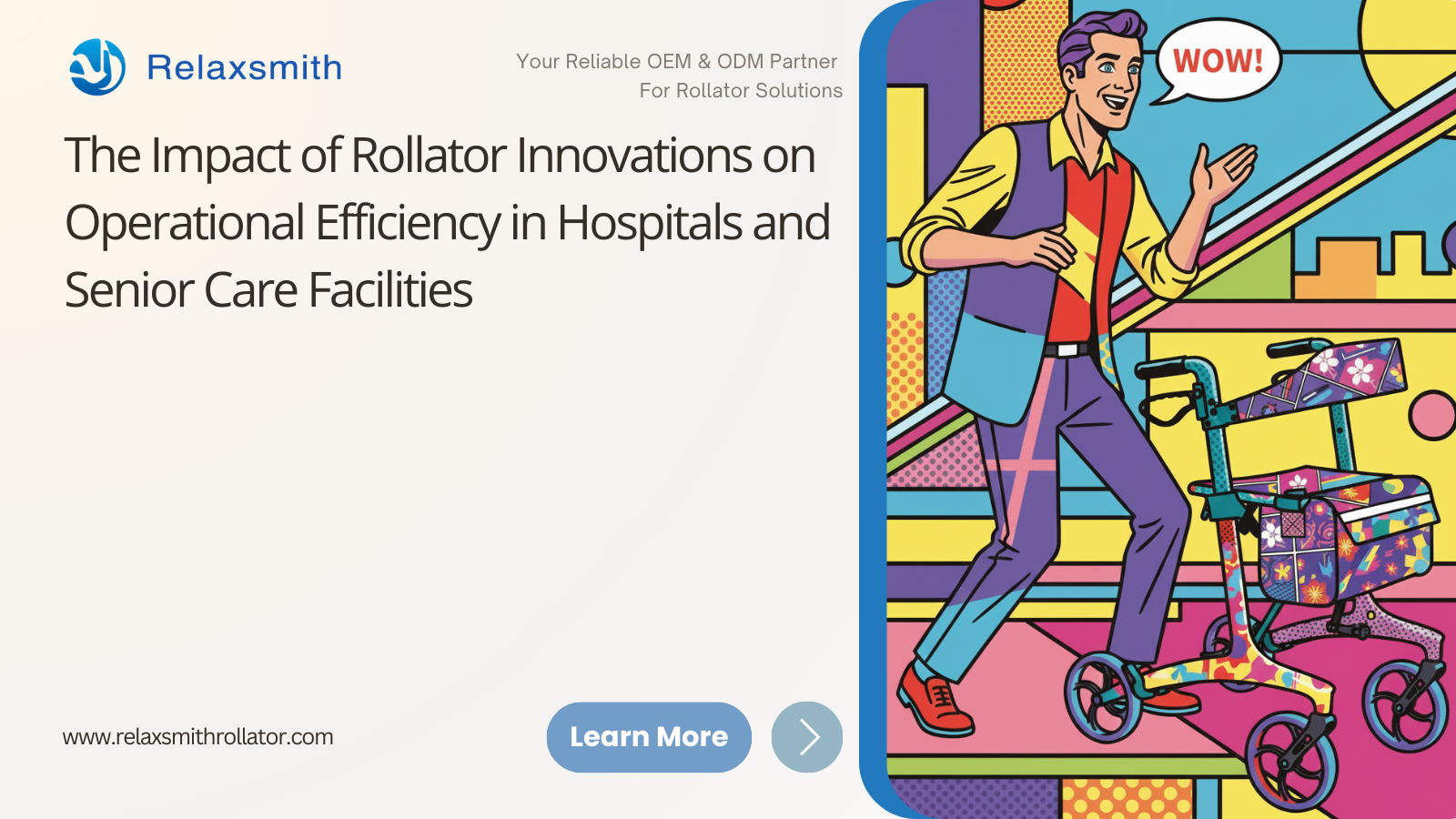
 The Impact of Rollator Innovations on Operational Efficiency in Hospitals and Senior Care Facilities
Innovations in rollator design have significantly impacted healthcare settings, particularly in hospitals and senior care facilities. These advancements not only improve patient mobility and safety but also contribute to increased operational efficiency. In this article, we will explore how modern rollator innovations help healthcare providers streamline their operations, reduce staff workload, and improve patient outcomes, ultimately creating more efficient healthcare environments.
The Role of Rollators in Healthcare Facilities
Rollators are essential mobility aids for patients with limited mobility, commonly used in hospitals, rehabilitation centers, and senior care facilities. They assist patients in walking, provide stability, and offer a safe place to rest. However, traditional rollators often lack the features necessary to meet the growing demands of modern healthcare settings. Recent innovations in rollator design have addressed these shortcomings, leading to improvements in patient care and operational efficiency.
Key Rollator Innovations and Their Impact on Efficiency
Healthcare facilities are increasingly adopting rollators with advanced features that enhance their functionality, safety, and ease of use. Below are some of the most important rollator innovations and their impact on operational efficiency:
Lightweight and Durable Materials: Modern rollators are designed using lightweight yet durable materials such as aluminum or carbon fiber. These materials make the rollators easier to transport, store, and maneuver. Healthcare staff benefit from these designs, as the lighter weight reduces physical strain when assisting patients or moving rollators between rooms. Additionally, the durability ensures long-lasting performance even in high-use environments.
Foldable and Compact Designs: Foldable rollators with compact designs are essential for saving space in busy healthcare settings. These rollators are easy to fold and store when not in use, reducing clutter and optimizing space utilization in patient rooms or common areas. This feature also makes it easier to transport patients across different areas of a facility without occupying unnecessary space.
Anti-Slip Seats for Enhanced Patient Safety: Anti-slip seats on rollators improve patient safety by providing a secure and stable sitting surface. This feature reduces the likelihood of patients slipping while transitioning from sitting to standing, thus preventing falls. By preventing fall-related injuries, healthcare facilities can reduce the frequency of medical interventions and the need for staff assistance, leading to improved operational efficiency.
Adjustable Handles and Seats: Adjustable handles and seats allow rollators to be customized to fit individual patients. This flexibility improves patient comfort and ensures that rollators are appropriate for patients of different heights and physical abilities. Healthcare staff can quickly adjust rollators for different patients, reducing time spent on equipment adjustments and improving care delivery efficiency.
Advanced Braking Systems: Rollators with advanced braking systems enable patients to stop more easily and maintain better control of their movements. Healthcare providers benefit from this feature because it reduces the risk of rollators rolling away unexpectedly, allowing patients to use their mobility aids with greater confidence. The brakes also contribute to overall safety, reducing the likelihood of accidents and falls.
Built-in Storage Solutions: Some modern rollators come equipped with built-in storage compartments, such as baskets or bags. This feature allows patients to carry personal belongings without requiring additional assistance from healthcare staff. This increases patient independence and reduces the frequency of staff intervention, leading to more efficient operations.
Improving Staff Efficiency and Reducing Workload
One of the primary advantages of rollator innovations is the reduction in the workload of healthcare staff. With advanced features such as anti-slip seats, adjustable components, and easy-to-use braking systems, patients can use their rollators more independently. This reduces the need for constant supervision or physical assistance, allowing healthcare providers to focus on other important tasks. Additionally, features like foldable frames and lightweight materials make it easier for staff to assist patients with mobility, resulting in time savings and more efficient care delivery.
Enhancing Patient Outcomes
Modern rollators not only enhance operational efficiency but also contribute to better patient outcomes. When patients have access to rollators that are comfortable, easy to use, and designed with safety in mind, they are more likely to use them regularly. Increased use of rollators can lead to improved mobility, strength, and independence, which accelerates recovery and rehabilitation.
Furthermore, by reducing fall-related injuries and providing a higher level of patient support, rollators contribute to overall patient safety and well-being. Patients who experience fewer falls and greater mobility are more likely to achieve better rehabilitation outcomes, resulting in a quicker recovery process and fewer readmissions.
Conclusion
Rollator innovations have a significant impact on the operational efficiency of hospitals and senior care facilities. By adopting modern rollators with advanced features, healthcare providers can streamline workflows, enhance patient safety, and improve patient outcomes. Features such as lightweight designs, adjustable components, anti-slip seats, and foldable frames all contribute to increased efficiency, reduced workload for staff, and improved quality of care for patients. As the demand for better healthcare grows, investing in innovative rollators is an effective solution for improving both operational efficiency and patient care.
Tags
Operational efficiency rollator
advanced rollator features
healthcare providers
mobility aids
elderly care
patient safety
fall prevention
healthcare solutions
rehabilitation mobility
patient independence
comfortable seating
rollator design
staff efficiency
reliable mobility aids
adjustable rollators
SEO Keywords
Operational efficiency rollator
advanced rollator features
healthcare providers
mobility aids
elderly care
patient safety
fall prevention
healthcare solutions
rehabilitation mobility
patient independence
comfortable seating
rollator design
staff efficiency
reliable mobility aids
adjustable rollators