





_compressed.jpg)
Adjustability and Compliance: Meeting ISO Standards Through Seat and Backrest Configuration
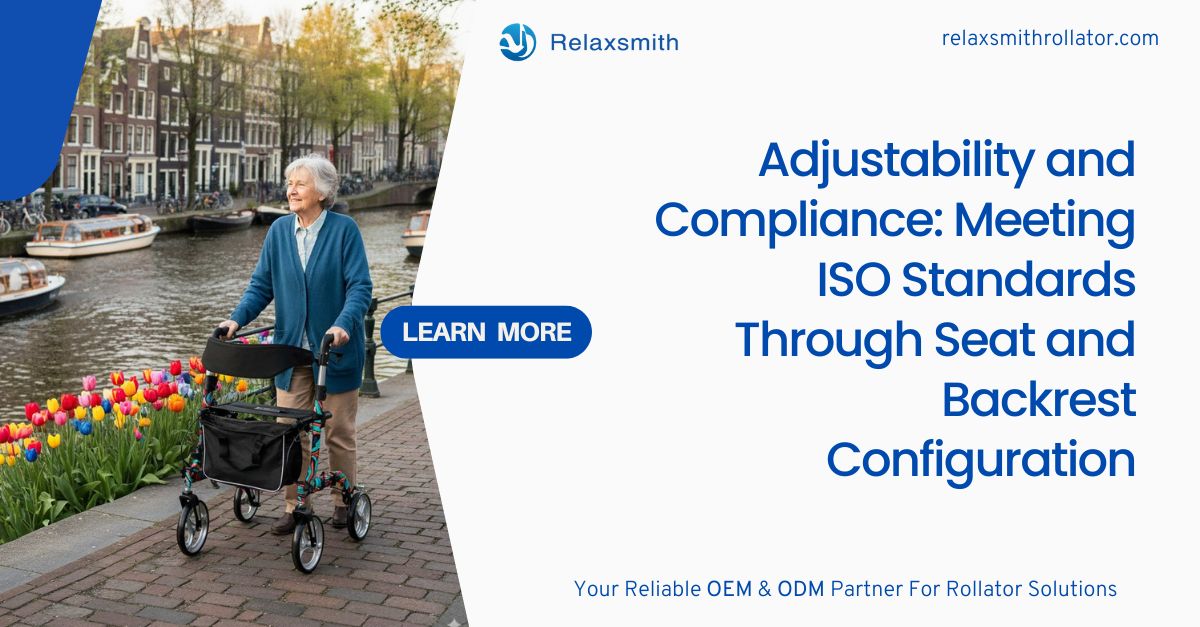
In regulated markets, healthcare equipment must meet international safety and ergonomic benchmarks. One aspect that is increasingly gaining attention from procurement professionals is why adjustable seat and backrest heights are a crucial feature. This flexibility is not just a comfort factor but is central to ISO compliance, especially ISO 11199-2, the global standard for rollators and walkers.
ISO Guidelines and Seat Configuration
ISO standards require walking aids to accommodate a wide range of users. The standard includes performance testing for:
Seating ergonomics and comfort for extended use
Biomechanics for safe and efficient standing transitions
Minimum and maximum adjustment ranges
Why adjustable seat and backrest heights are a crucial feature is underscored by these requirements. Without adjustability, most devices fail compliance audits.
Supporting Diverse User Profiles
Rollators are now used by post-operative patients, bariatric users, and individuals undergoing physical therapy. Fixed designs often result in:
Poor postural alignment during seated recovery
Increased caregiver assistance needs
Reduced patient engagement in therapy tasks
This is precisely why adjustable seat and backrest heights are a crucial feature for devices entering multi-disciplinary settings. One unit must serve a range of mobility needs.
Procurement Strategy and Legal Compliance
Adjustable components also serve a legal purpose. Facilities that fail to procure ISO-compliant mobility aids may be exposed to litigation or fail inspections by regulatory bodies. Adjustable seating allows for:
Documentation of conformance to national standards
Traceable asset verification for audit trails
Customization without structural compromise
Strategic buyers recognize the adjustability feature as essential for both clinical effectiveness and institutional risk reduction.
Conclusion
The ability to fine-tune seat and backrest configurations isn’t just a user comfort benefit—it’s a regulatory and performance imperative. When evaluating vendors or conducting RFPs, always consider why adjustable seat and backrest heights are a crucial feature to remain compliant, effective, and cost-efficient.



