





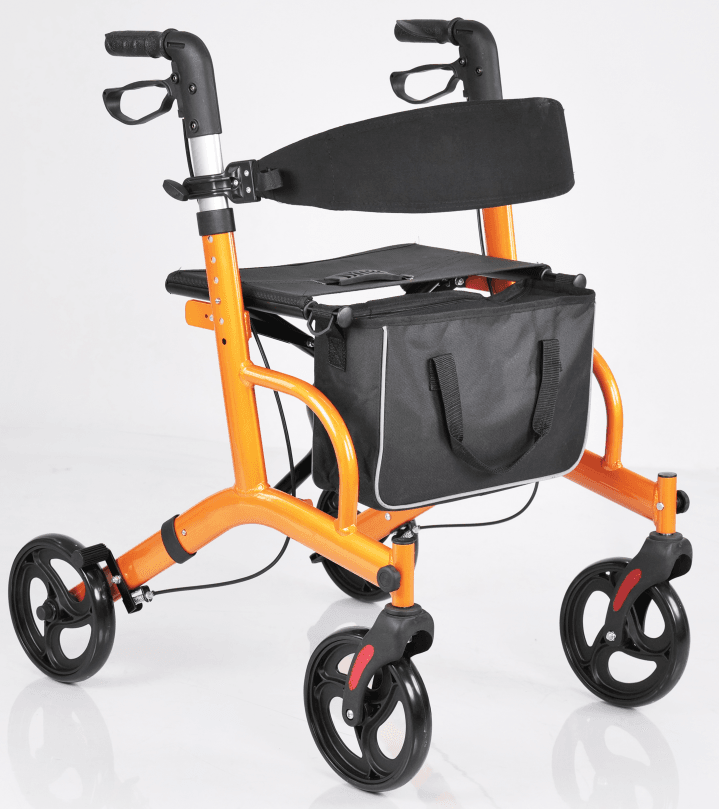
Why Adjustable Seat and Backrest Heights Are Critical in Rollator Design

For product managers and procurement specialists in the healthcare and mobility sectors, customization in patient equipment is not a luxury—it's a necessity. Among the most significant design advancements is the implementation of adjustable seating. Understanding why adjustable seat and backrest heights are a crucial feature can guide smarter investment in user-centered mobility aids.
Ergonomic Necessity Across Patient Types
Patient populations vary dramatically in height, posture, and functional ability. A one-size-fits-all design leads to discomfort and poor long-term outcomes. This is why adjustable seat and backrest heights are a crucial feature:
Optimizes spinal alignment, reducing pain and fatigue
Improves pressure distribution for prolonged sitting
Enables better seated posture for therapy sessions
Rollators with fixed seating often lead to slouched posture or under-supported lower backs—affecting mobility and recovery.
Flexibility in Clinical and Home Environments
Facilities may share rollators across patients or units. Adjustable features offer cross-user usability:
Accommodates multiple users in shared environments
Reduces need to stock various seat-height SKUs
Aligns with home-modification trends for aging-in-place
This flexibility supports cost-effective procurement while maintaining individualized patient care.
Impact on Safety and Transfer Mechanics
A key reason why adjustable seat and backrest heights are a crucial feature is that they optimize biomechanics during sit-to-stand transitions. Benefits include:
Reduced fall risk during transfers
Enhanced independence and confidence in users
Improved caregiver ergonomics and reduced strain
When seat height is too low or the backrest misaligned, users exert more effort to stand or experience instability.
Conclusion
In sum, understanding why adjustable seat and backrest heights are a crucial feature is central to advancing user-centric, flexible, and clinically compliant mobility equipment. Whether specifying new devices or evaluating vendor proposals, professionals should prioritize adjustability as a core value—enhancing outcomes, compliance, and cost control across care environments.



