





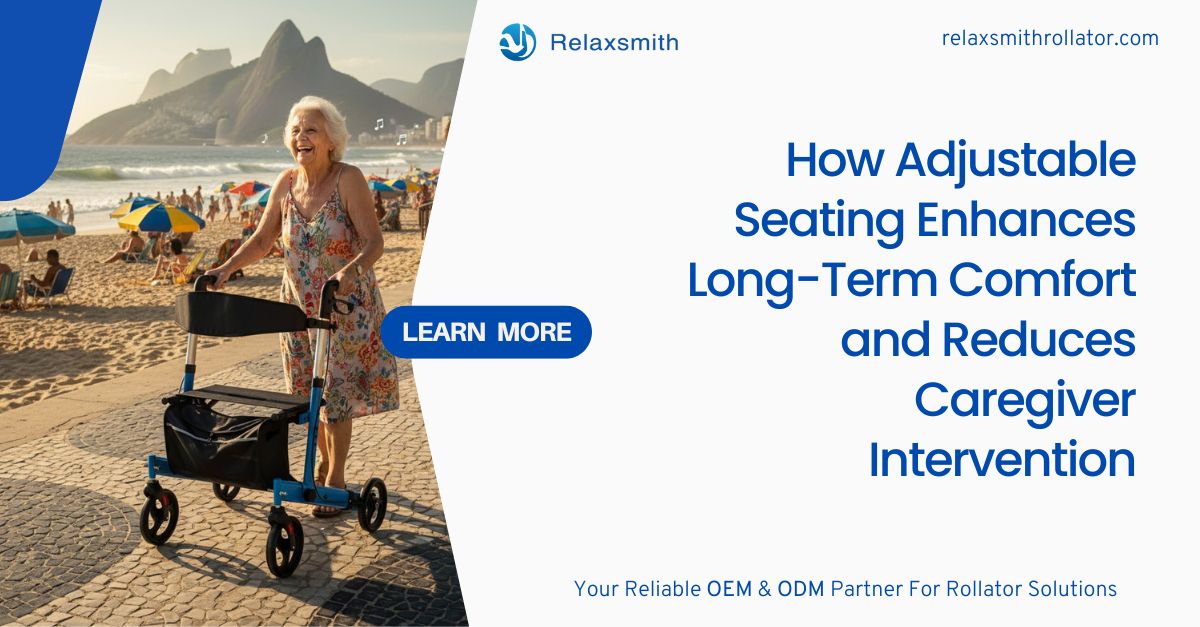
How Adjustable Seating Enhances Long-Term Comfort and Reduces Caregiver Intervention
In healthcare environments, long-term patient comfort directly impacts care outcomes, mobility retention, and operational efficiency. Procurement professionals and product developers must acknowledge why adjustable seat and backrest heights are a crucial feature in rollators designed for extended use. These features do more than improve posture—they contribute to reduced caregiver burden and overall cost efficiency.
Supporting Natural Posture Over Time
A user's height, leg length, and spine curvature influence how they interact with their seat. Without proper adjustment, prolonged sitting leads to:
Lower back strain and misalignment
Hip discomfort or compression
Uneven pressure distribution, increasing ulcer risk
Why adjustable seat and backrest heights are a crucial feature becomes clear in long-term applications such as rehabilitation or aging-in-place. Equipment must adapt as patients recover or decline.
Minimizing the Role of Caregiver Adjustments
Care teams often spend valuable time repositioning patients, adjusting cushions, or transferring users to alternative chairs. Rollators with ergonomic adjustability reduce this need by:
Allowing patients to independently find comfortable positioning
Maintaining posture alignment for longer sessions
Preventing over-reliance on staff assistance
These benefits explain why adjustable seat and backrest heights are a crucial feature for reducing caregiver workload in outpatient, assisted living, and rehab settings.
Facilitating Long-Term Engagement and Compliance
Uncomfortable equipment discourages use, leading to sedentary behavior and delayed recovery. Adjustable seating helps maintain patient adherence to care plans:
Encouraging users to remain seated longer during therapy or group activities
Reducing refusal or avoidance of mobility aids
Improving overall equipment utilization
Long-term comfort directly affects ROI on mobility investments.
Conclusion
Procurement teams must prioritize patient-centered design when specifying mobility solutions. Why adjustable seat and backrest heights are a crucial feature lies in their ability to support posture, reduce staff strain, and increase care engagement. These factors elevate the device from a functional aid to a long-term health partner.



