





Procurement Guide: Selecting Rollators Suitable for Air Travel
Choosing the right rollator for air travel is a critical responsibility for procurement teams and product developers. With increased global mobility needs, devices must now comply with airline policies while enhancing traveler experience. This article outlines procurement standards, safety criteria, and real-use considerations to help you confidently specify rollators designed to travel by air with rollator-friendly features and guarantees.
Why Air Travel Compatibility Matters
Traveling by air with rollator is no longer niche. Seniors, professionals with mobility limitations, and even temporary users need rollators that integrate smoothly into air travel routines. From gate check to baggage handling, rollators should avoid user stress and airline disputes. Proper procurement ensures users retain dignity and independence during their journey.
Top Selection Criteria for Air-Travel-Ready Rollators
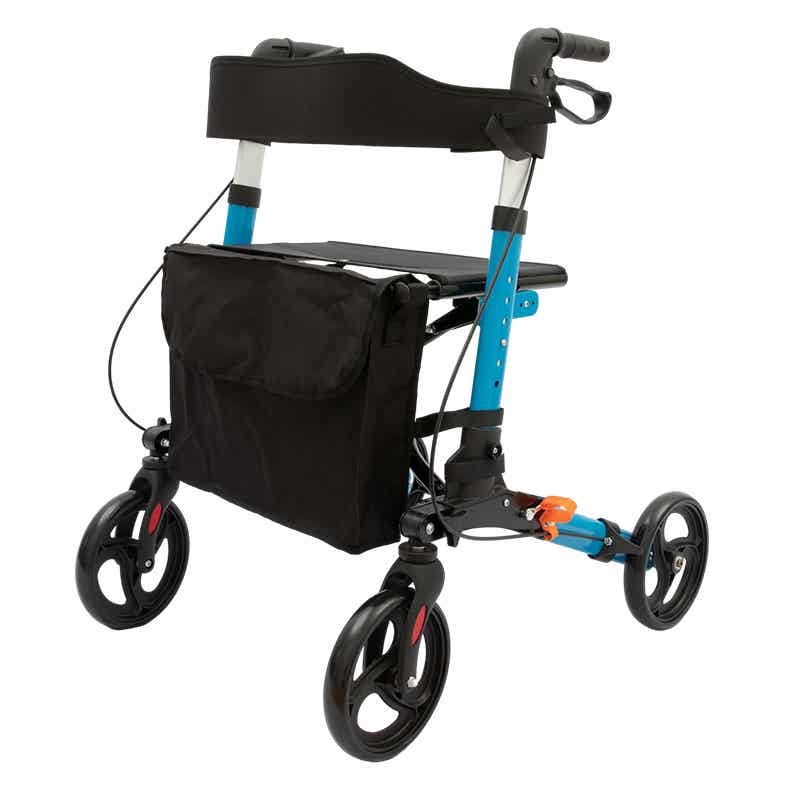
Weight: Must be light enough to be carried or gate-checked without damaging the unit.
Folding mechanism: One-hand fold, quick-release hinges, and compact dimensions make check-in and stowage easy.
Dimensions: Fits within airline mobility equipment standards (usually under 25 inches folded length).
Materials: Scratch- and corrosion-resistant frames to handle baggage handling systems.
Stability: Braking system and locking wheels prevent accidental movement when parked in cabins or terminals.
Compliance: Airline-approved label or documentation for clearance at boarding gates.
Supplier Evaluation Questions
Does your rollator line include models optimized to travel by air with rollator-specific design proof?
Have you conducted user testing or received feedback from frequent flyers?
Can your rollators be shipped in airline-ready packaging or reinforced casing?
Do you offer service contracts for parts replacement due to travel damage?
Is airline documentation included for customs, gate agents, or check-in personnel?
RFP Language Sample
“Rollator must meet TSA and IATA mobility device standards. Must weigh under 8 kg, collapse in under 10 seconds, and be operable with one hand. Must have compliance markings and withstand 10 drop/fold test cycles simulating airline handling.”
Supporting Procurement With Performance Metrics
Include post-purchase monitoring of travel performance: incidents during flight, user satisfaction, handling complaints, damage frequency, and return rates. This loop closes the gap between design expectations and in-field reality—essential for any rollator that’s intended to let users travel by air with rollator peace of mind.
Conclusion
Procurement teams play a pivotal role in ensuring rollator users have seamless travel experiences. By applying rigorous selection criteria, asking the right supplier questions, and monitoring travel feedback, you can make sure the rollator your institution provides will genuinely support air travel needs. Help users travel by air with rollator confidence—while optimizing durability, logistics, and customer satisfaction.