





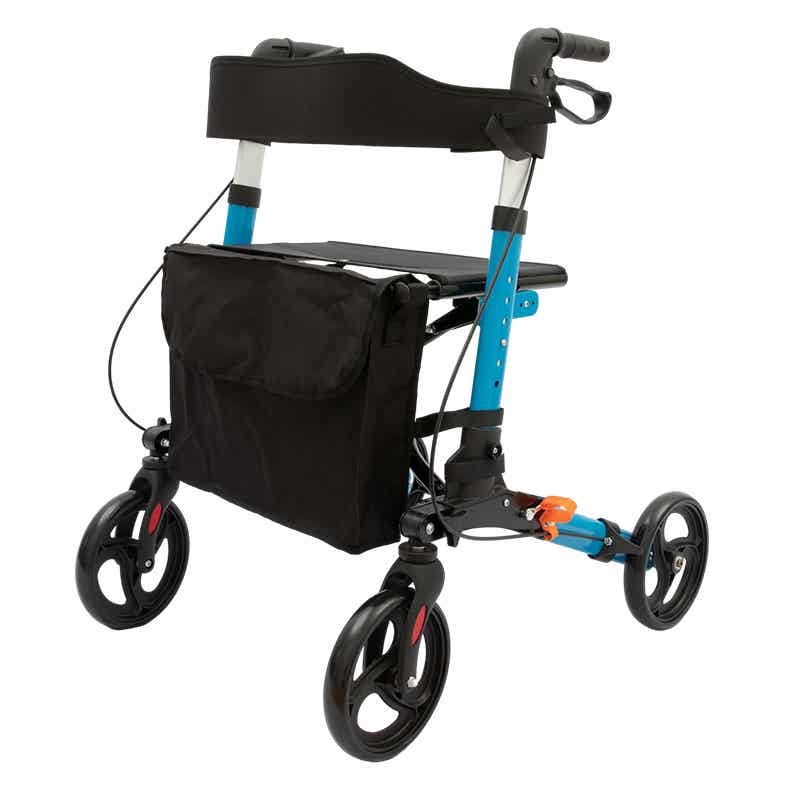
User Experiences: Real Stories of Traveling by Air with Rollator
.jpg)
For many rollator users, the question “how do you travel by air with rollator?” becomes real when planning a flight. This article shares vivid user stories from different corners of the world—people who already navigate airports, security, flights, and baggage claim while relying on their rollators. These narratives reveal what works, what doesn’t, and what product managers and procurement teams can learn from lived experience.
Story 1: Elena’s Flight from New York to Paris
Elena, 65, was anxious about her first international trip since aging made long walks harder. She contacted the airline ahead, confirmed that her rollator would be gate‑checked, and chose a model that folds quickly. Elena says that when she had to travel by air with rollator, she was relieved to find airline staff trained to handle mobility aids; her rollator arrived without damage, and she passed through security smoothly because her device had compliant labeling. This journey set a new benchmark for what travelers expect.
Story 2: Raj’s Business Trip via Multiple Airports
Raj, 72, flies frequently for work. Years ago, he used a rollator that was heavy and hard to collapse, which made transfers between terminals slow and uncomfortable. After upgrading to one with lightweight aluminum and a simplified folding mechanism, he found that traveling by air with rollator became easier: less time in queues, fewer gate‑handoffs, and more confidence in navigating crowds and tight spaces.
Story 3: Maria’s Return Home During Winter Storm Delays
Maria was traveling in winter with connections delayed by snow. Her rollator’s seat and good braking system helped her get through long queues and stand‑by lines at gates safely. She emphasizes that design details like weather‑resistant materials, secure folding latches, and visible color accents made a difference. For Maria, being able to travel by air with rollator in harsh conditions meant not having to cancel her trip—and feeling confident despite the delays.
Lessons Product Managers Can Learn
Include airline protocol compliance in product design—labels, dimensions, and materials that meet airline mobility aid standards.
Test fold‑and‑unfold cycles aggressively; frequent flyers will judge durability harshly.
Equip rollators with user‑friendly handles, lighter weight, bright markings that help both travelers and airline agents.
Provide good documentation and user guides about how to pack and prepare their rollator for air travel; users appreciate proactive info when flying.
Ensure replacement parts or extras available for travel damage (wheels, latches) to reduce user frustration and returns.
Procurement & Supply Chain Implications
Procurement teams should include specifications in tenders that reflect these user lessons: foldability, lightweight build, airline compliance, protective packaging, and user training. Vendors who can demonstrate that their product lets customers travel by air with rollator reliably will have a competitive edge in bidding. Also, after‑sales support and durability warranties will be deciding factors for institutional purchasers.
Conclusion
User stories paint a rich picture: when people can fly, explore, and return home without fear of damage, delay, or embarrassment, their mobility device becomes a true companion. For product designers, procurement professionals, and supply chains, absorbing these real world insights is essential. Ensuring specifications and services align with what people ask when they travel by air with rollator helps build loyalty, market trust, and ultimately better outcomes for users.



