





Procurement Strategies: Specifying Rollators that Enhance Social Life and Confidence
.jpg)
When procurement teams select mobility aids, the focus often lies on durability, cost, and basic safety. But there’s growing recognition among product managers and supply chain leaders that what sets leading products apart is how well they support users’ social engagement. This includes defining how a rollator improved social life and confidence for elderly users as a procurement criterion, to ensure devices deliver not just mobility but meaning.
Setting Specifications that Matter
Supportive seating & rest‑spots: Include requirements for integrated seat with backrest so that users can rest during social outings, reducing fatigue and enhancing comfort.
Storage accessories for social activities: Baskets, trays, cup holders, or side pouches so users can carry personal items to social gatherings without extra load.
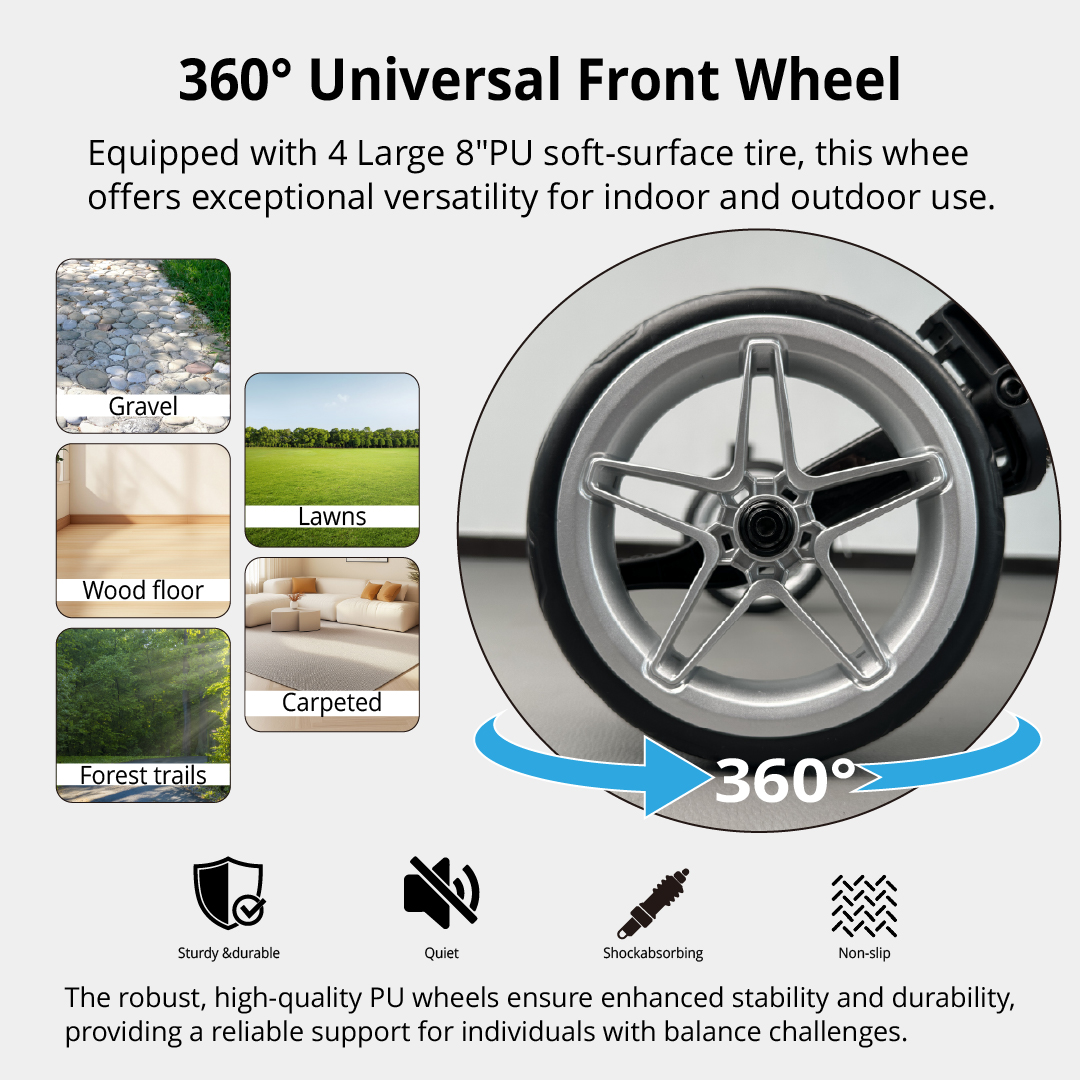
High‑quality wheels and braking: Wheels that glide over sidewalks, bricks, or uneven terrain and brakes that lock securely—factors that often determine whether a user feels safe enough to attend a gathering. These features contribute directly to how rollator improved social life and confidence.
Aesthetic design and user perception: Attractive colors, smooth lines, fabric choices can make the rollator appear more like a personal accessory than a medical device, reducing stigma and increasing willingness to use it in public.
Lightweight portability and transportability: Devices that fold easily, are manageable in vehicles, and easy to store make it more likely users will take them to social venues, classes, or community events.
Vendor Evaluation & Trials
Procurement should include trials in real social settings: community centers, parks, or cafés. Invite seniors to test prototypes and provide feedback about comfort, aesthetics, and social ease. Observing how users interact—do they smile, feel relaxed, or avoid using the rollator publicly—provides insight into whether rollator improved social life and confidence from the user’s viewpoint.
Balancing Cost and Added Value
Evaluate cost per unit not only on manufacturing but on accessory integration and long‑term user satisfaction.
Include maintenance and parts replacement in contracts to sustain performance over time.
Offer upgrade paths so entry‑level models can adopt enhancements that boost social engagement.
Set key performance indicators (KPIs) such as user satisfaction surveys, community participation rates, and reduced social withdrawal to measure procurement success.
Implementation Tips for Supply Chain Teams
Engaging supply partners early, defining clear accessory specifications, arranging warranty or spare‑parts commitments, and ensuring after‑sales support are essential. Training materials, imagery, and real user testimonies help educate both vendors and end users. With strong vendor relationships, procurement can ensure the rollator improved social life and confidence becomes a predictable outcome, not a hope.
Conclusion
For product and procurement leaders, success means designing beyond the basics. When a rollator enhanced by thoughtful design, accessories, and aesthetic appeal allows users to step out, socialize, and reclaim presence, we see how rollator improved social life and confidence in real, meaningful ways. This alignment of function, dignity, and value creates products that not only aid mobility—but restore connection.



