
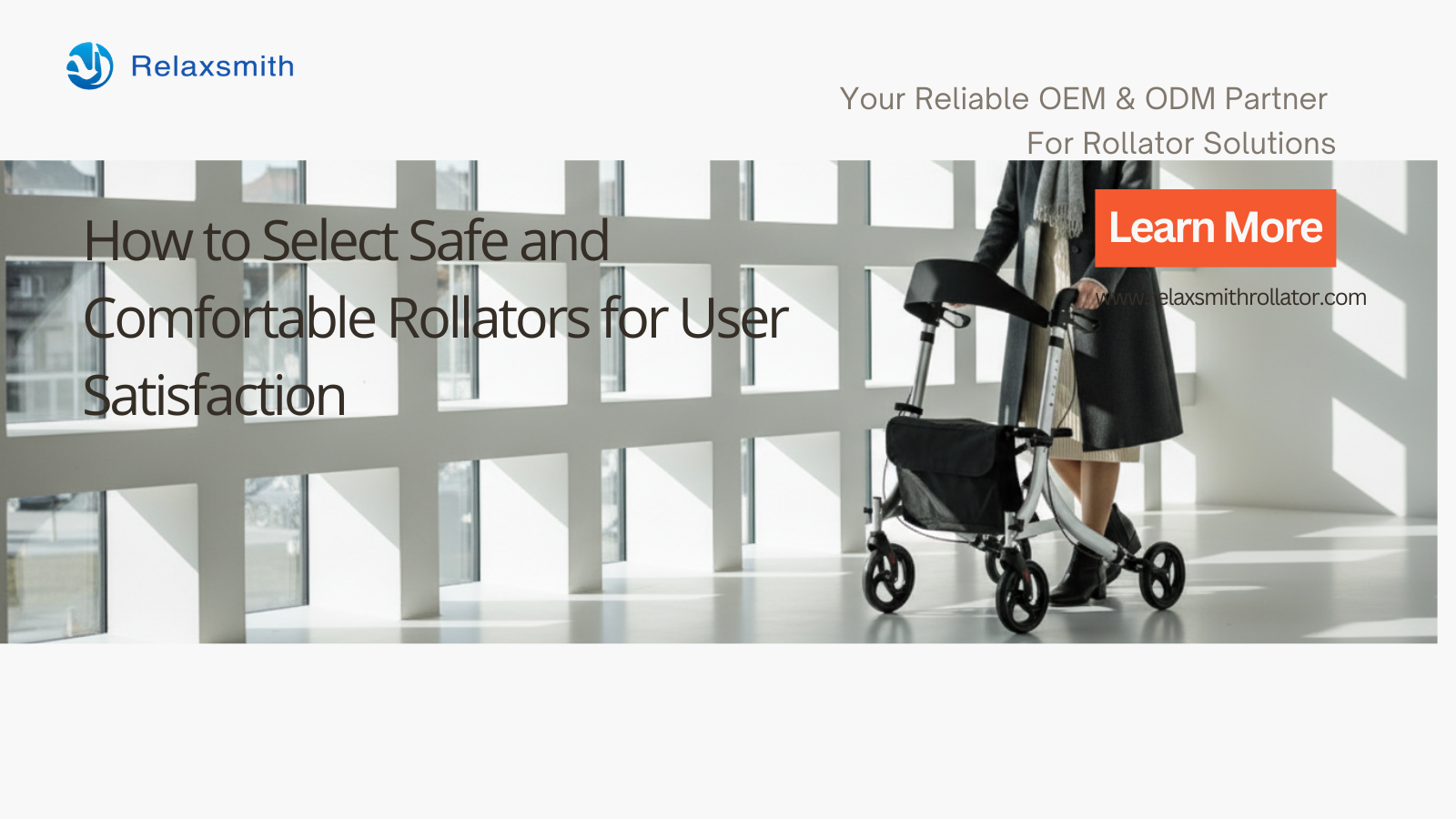
 How to Select Safe and Comfortable Rollators for User Satisfaction
Ensuring the safety and comfort of users is one of the most crucial responsibilities of product managers when selecting rollators. In this article, we will explore how product managers can prioritize safety and comfort to meet user expectations and enhance user satisfaction.
1. Safety Features That Protect the User
Product managers must prioritize safety when selecting rollators. Users with mobility issues are often at risk of falls or other injuries, so selecting rollators with the best safety features is essential. Some key safety features include:
Sturdy frames to support the user’s weight without tipping over
Non-slip wheels that provide traction on various surfaces
Brakes that are easy to engage and provide stability when stopping
By selecting rollators with these safety features, product managers ensure the user’s safety while also improving the overall user experience.
2. Ensuring Comfort During Use
Comfort is just as important as safety. If users are uncomfortable with their rollators, they may not use them consistently, which defeats the purpose of having the mobility aid. Product managers should prioritize features such as:
Adjustable handles that can accommodate different user heights
Padded seats or armrests for added comfort during long periods of use
Ergonomic grips that reduce strain on the hands and wrists
Comfortable rollators encourage longer usage, which leads to higher user satisfaction and better outcomes.
3. Testing Rollators for Real-World Conditions
Product managers should test rollators in real-world conditions to assess their safety and comfort features. This can be done by observing users in various settings such as indoors, outdoors, and on different types of terrain. Key factors to assess include:
The ease of maneuvering the rollator on narrow hallways and uneven surfaces
The stability of the rollator when used on slopes or stairs
The overall comfort and usability in different environments
Real-world testing helps product managers ensure that the rollators will perform effectively for a wide range of users in different settings.
4. Prioritizing Long-Term Durability
While safety and comfort are important, product managers must also consider the long-term durability of the rollators. Users need mobility aids that can withstand regular use over time. Durable rollators require less frequent repairs and replacement, ensuring they continue to meet user needs in the long run. When evaluating rollators, product managers should look for:
High-quality materials that resist wear and tear
Long-lasting wheels and brakes
Sturdy frames that can support extended usage
By choosing durable rollators, product managers reduce the cost of repairs and replacements and provide users with reliable mobility aids.
5. User Feedback and Continuous Improvement
Finally, product managers should continuously gather user feedback to improve the safety and comfort of rollators. By analyzing feedback from users, caregivers, and healthcare professionals, product managers can identify areas for improvement and make adjustments to future product selections. This iterative process ensures that rollators continue to evolve to meet the changing needs of users.
Tags: Product manager rollator selection, rollator safety, user comfort, healthcare product manager, durable rollators, mobility aids, user feedback, rollator testing, long-term usability, product selection
SEO Keywords: product manager rollator selection, rollator selection, product manager rollator selection
For more details, please visit: www.relaxsmithrollator.com
READ MORE: