
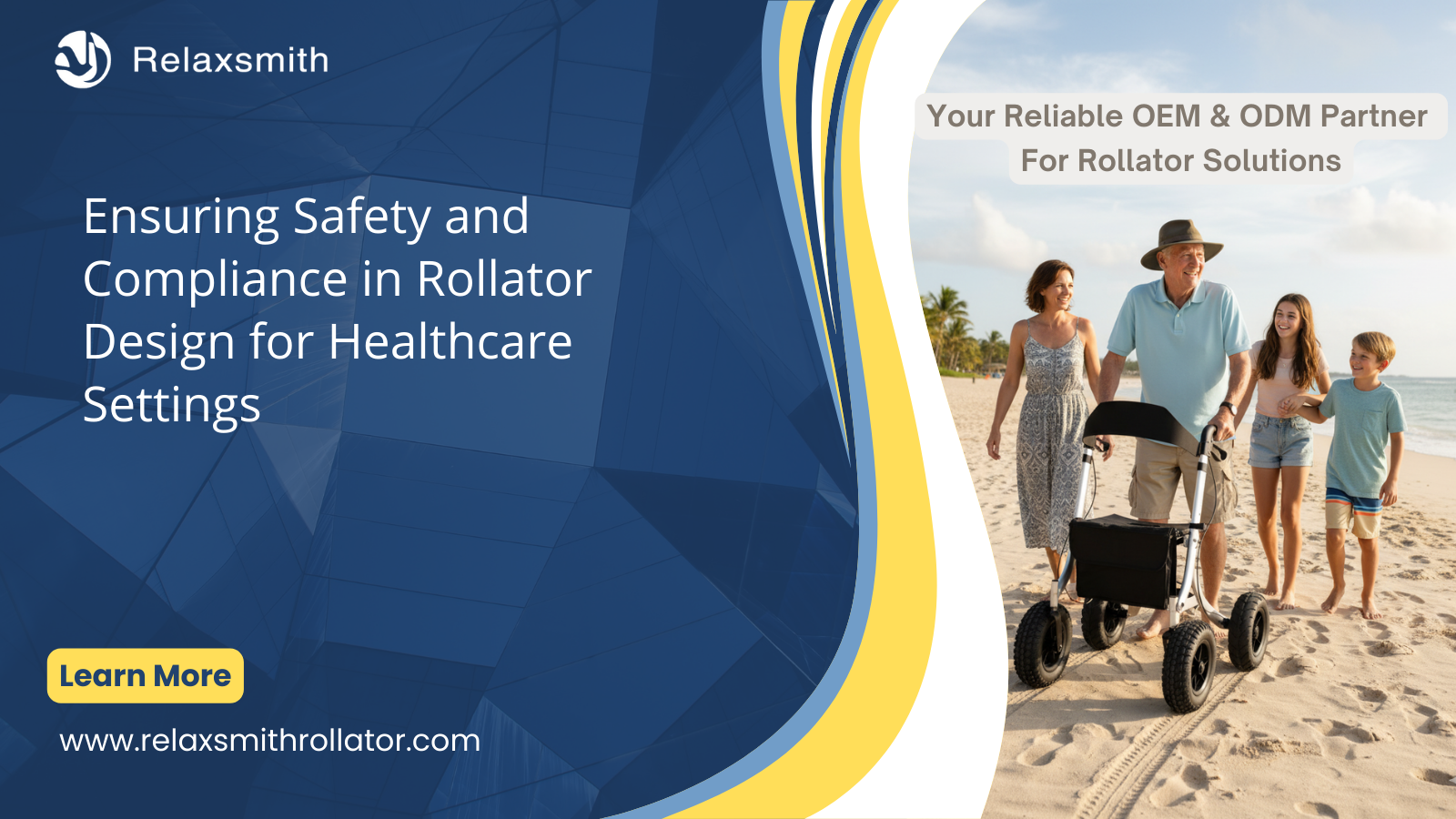
 Ensuring Safety and Compliance in Rollator Design for Healthcare Settings
Designing rollators that comply with safety regulations is critical for ensuring their effectiveness in healthcare settings. This article explores the essential safety features and design elements that product managers should focus on when developing clinically compliant rollators for healthcare environments.
1. The Importance of Safety Features in Rollator Design
Safety is the top priority when selecting rollators for clinical use. Product managers must ensure that rollators meet all the necessary safety standards while providing users with the necessary support. Essential safety features include:
Sturdy Construction: A strong, durable frame that can support the weight of users without tipping over or losing stability.
Non-slip Wheels: Wheels with anti-slip properties to ensure stability on various surfaces, including wet floors and uneven terrain.
Braking Systems: Brakes that are easy to engage, providing the user with control and stability, particularly on slopes or when coming to a stop.
By integrating these safety features, product managers can ensure that rollators are safe for use in clinical environments, reducing the risk of accidents and improving overall user satisfaction.
2. Meeting Regulatory Standards for Healthcare Devices
In healthcare settings, rollators are considered medical devices and must comply with specific regulatory standards. These standards are set by various regulatory bodies, including the FDA, ISO, and CE, depending on the region. Product managers must ensure that rollators meet the following regulatory requirements:
FDA Approval: In the United States, rollators must be approved by the FDA as medical devices. This approval ensures that the product meets safety standards for healthcare use.
ISO 11199: This international standard ensures that rollators meet essential safety, performance, and design requirements. Compliance with ISO 11199 is crucial for ensuring the quality and reliability of rollators.
CE Marking: For rollators sold in Europe, the CE marking ensures that the product complies with the EU Medical Device Regulation (MDR), meeting health and safety standards.
By adhering to these regulatory standards, product managers can ensure that rollators meet the necessary safety and quality requirements for healthcare settings.
3. Key Design Elements for Compliance and Safety
In addition to safety features and regulatory compliance, rollator design must incorporate key elements that promote comfort, functionality, and usability for users. Some essential design considerations include:
Ergonomic Handles: Adjustable handles that are easy to grip and reduce strain on the hands and wrists. Properly positioned handles help users maintain proper posture and support during use.
Adjustable Height: The ability to adjust the height of the rollator ensures that users of varying sizes can achieve a comfortable and supportive position.
Compact Design: A foldable design that allows for easy storage and transportation, making the rollator convenient for healthcare providers and users alike.
These design elements contribute to user comfort and satisfaction while ensuring that the rollators are safe and compliant with healthcare standards.
4. Conducting Rigorous Testing for Safety and Compliance
To verify that rollators meet safety standards and clinical compliance, product managers must conduct rigorous testing. These tests should evaluate the rollator’s durability, stability, and performance in real-world conditions. Common testing procedures include:
Stress Testing: Ensuring that the rollator can support a range of user weights and maintain stability under pressure.
Stability Testing: Testing the rollator’s stability on various surfaces, such as carpet, tile, and outdoor terrain.
Brake Function Testing: Verifying that the braking system is effective and easy to operate, ensuring the user’s safety at all times.
Product managers should also work closely with certification bodies to ensure that rollators are compliant with the required healthcare regulations and standards.
5. User Feedback and Ongoing Improvements
Feedback from healthcare providers, caregivers, and users is essential for improving rollator designs. By gathering insights on user experiences and identifying areas for improvement, product managers can make iterative improvements to the rollator design. Continuous monitoring and feedback loops help ensure that rollators remain compliant with regulatory standards and meet the evolving needs of healthcare environments.
Tags: Clinical compliance rollator, healthcare product design, rollator safety, product compliance, regulatory standards, rollator testing, user safety, mobility aids, healthcare devices, ISO standards
SEO Keywords: clinical compliance rollator, rollator design, clinical compliance rollator
For more details, please visit: www.relaxsmithrollator.com
READ MORE:









