





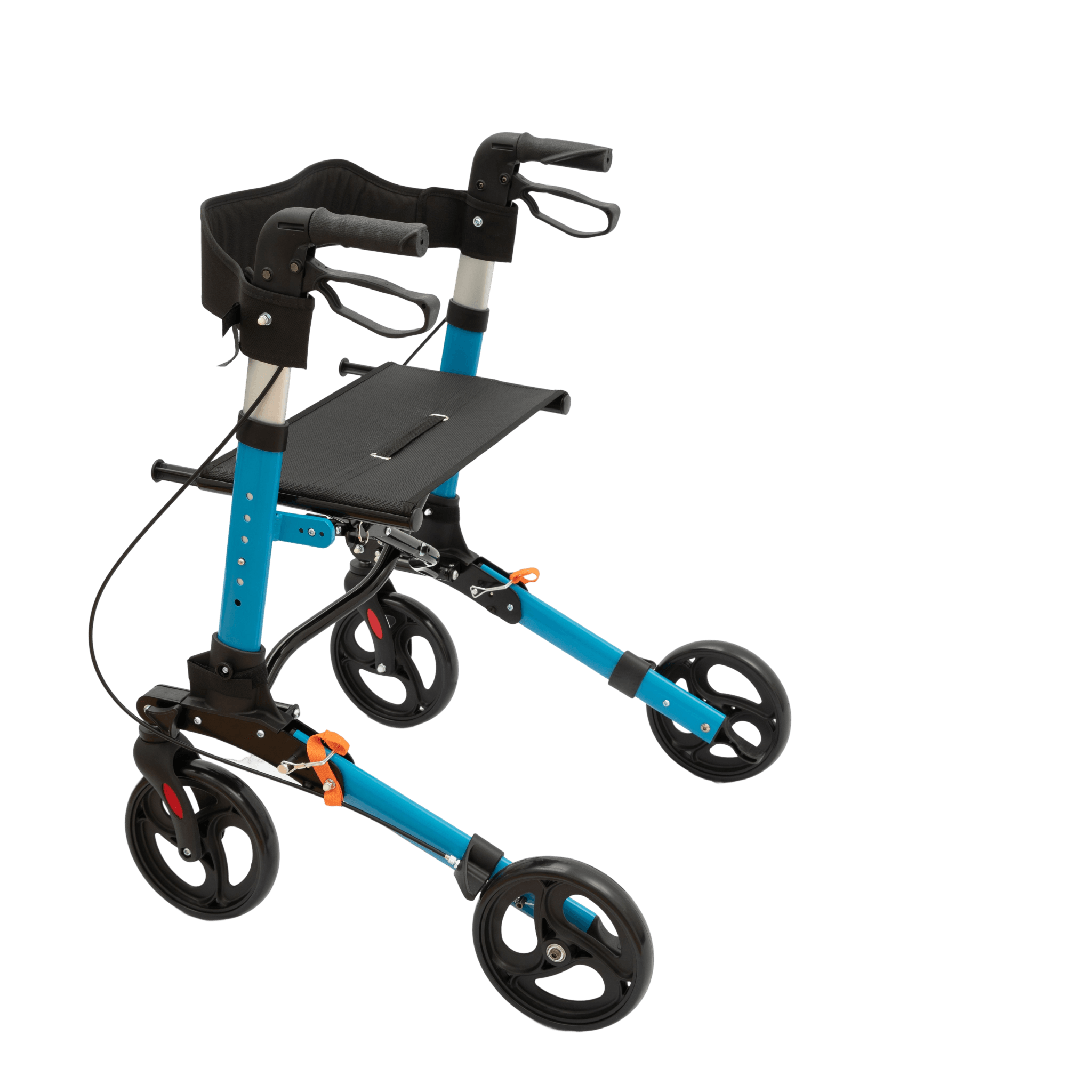
Comparative Testing: How to Measure and Verify Rollator Weight Suitability
Rollators are vital for mobility support, but they can become burdens if poorly matched to user strength and health. Clinical teams and procurement officers must rely on data—not assumption—when choosing devices. Comparative testing helps identify the signs that use a rollator that's too heavy before deployment causes user fatigue or safety risk. This article outlines scientific and operational ways to evaluate weight suitability.
1. Static Weight Benchmarks
Each model should have a documented empty weight. Create a benchmark by user profile: frail seniors under 5'2" may tolerate 13–15 lbs, while taller or athletic users can manage 16–20 lbs. If testing exceeds these benchmarks and users exhibit the signs that use a rollator that's too heavy, consider downsizing or switching materials.
2. Dynamic Strain Analysis
Use wearable sensors to track joint angles and muscle fatigue across various surfaces—hallways, ramps, outdoors. Gather data before and after 5- and 10-minute walks. If results show increased elbow torque, shoulder lift effort, or instability, they’re physiological signs that use a rollator that's too heavy for consistent daily use.
3. Lift-and-Transport Trials
Ask test users to simulate transport: folding the rollator, placing it in a trunk, or lifting onto public transport steps. Record effort, timing, and user feedback. A model that performs well on flat walking tests may still show the signs that use a rollator that's too heavy during these logistical challenges.
4. Longitudinal Compliance Monitoring
Track real-world usage via GPS or diary logs. Drop-off in use frequency, shorter distances, or user-reported wrist pain are indirect flags. This feedback helps detect underperforming rollator weight selections and refines future procurement.
5. Comparative Peer Testing
Set up blind tests where users try different models for short periods. Record preferences and perceived comfort. Sometimes, users may not articulate discomfort but instinctively select lighter models. Pair results with load-cell data for validation.
Conclusion
Rollator suitability must be measured, not guessed. With structured comparative testing—across strain analysis, real-world lift tasks, and post-use feedback—teams can confidently eliminate devices that trigger the signs that use a rollator that's too heavy. This protects users and elevates product success rates.



