





.JPG)
Procurement Parameters: Including Fit Metrics in Your Rollator RFPs
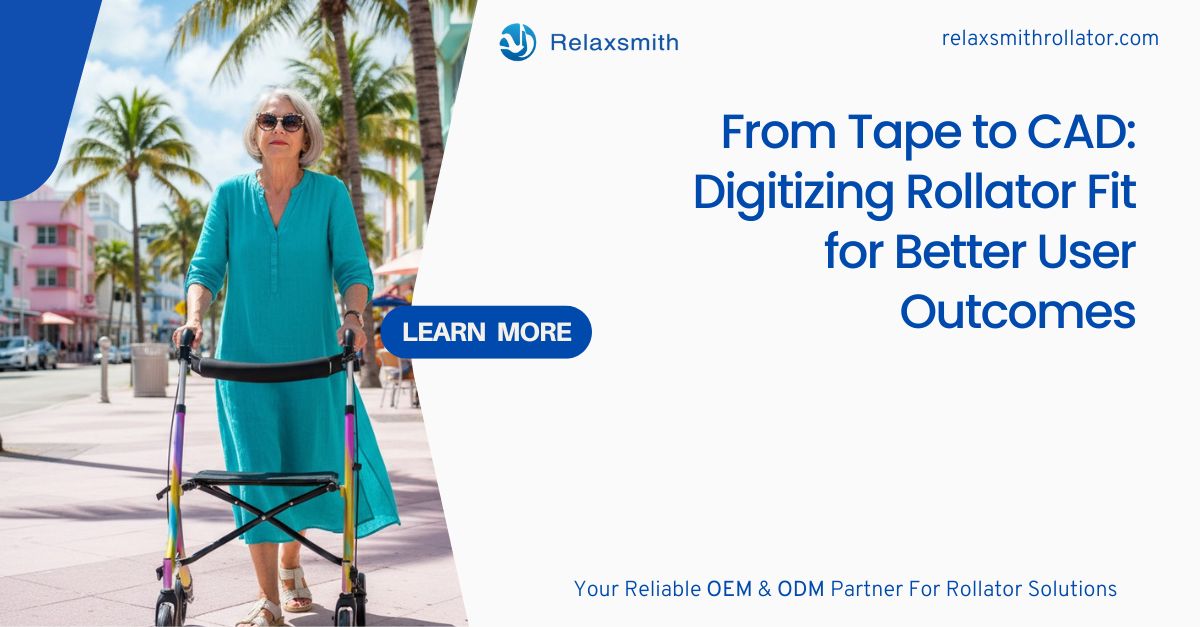
Procurement decisions affect patient safety, usability, and product longevity. Yet many requests for proposals (RFPs) for rollators overlook one of the most important elements—fit. Without structured criteria to ensure the correct rollator fit, facilities risk acquiring bulk orders of non-compliant or uncomfortable devices. This article explains how to embed fit-related metrics into procurement workflows.
1. Define Fit-Related Performance Metrics
Start with specific, testable measurements: adjustable handle height range, seat-to-floor range, recommended user height, and weight capacity. Require vendors to provide data or certifications proving these dimensions align with end-user profiles. This prevents mismatches and improves the chance to ensure the correct rollator fit across user groups.
2. Mandate Ergonomic Testing and Reporting
Include language that requires field testing with diverse user groups. Ask vendors to submit gait analysis or posture metrics showing fit under real conditions. Products that do not meet ergonomic thresholds should be excluded from final bids.
3. Request Case Studies or User Fit Testimonials
Ask bidders to provide 2–3 documented cases where their rollators successfully supported users with varied heights, body weights, and mobility challenges. Real-world use is often the strongest indicator that a product can truly ensure the correct rollator fit.
4. Include Fit Fail Rate and Return Policy Review
Many procurement teams overlook post-deployment fit failures. Include a clause requiring vendors to disclose historical return or rejection rates due to sizing issues. Vendors with low failure rates offer more reliable sourcing.
5. Build in Site-Specific Fit Simulation
Request that shortlisted vendors perform a live or virtual simulation with actual site users before contract signing. This pre-contract demonstration provides a final, user-centered step to ensure the correct rollator fit at scale.
Conclusion
Including fit-focused criteria in your rollator RFPs improves user compliance, reduces returns, and supports patient safety. Procurement should move beyond lowest-cost evaluation and instead prioritize rollators that can demonstrably ensure the correct rollator fit in real-world usage.