





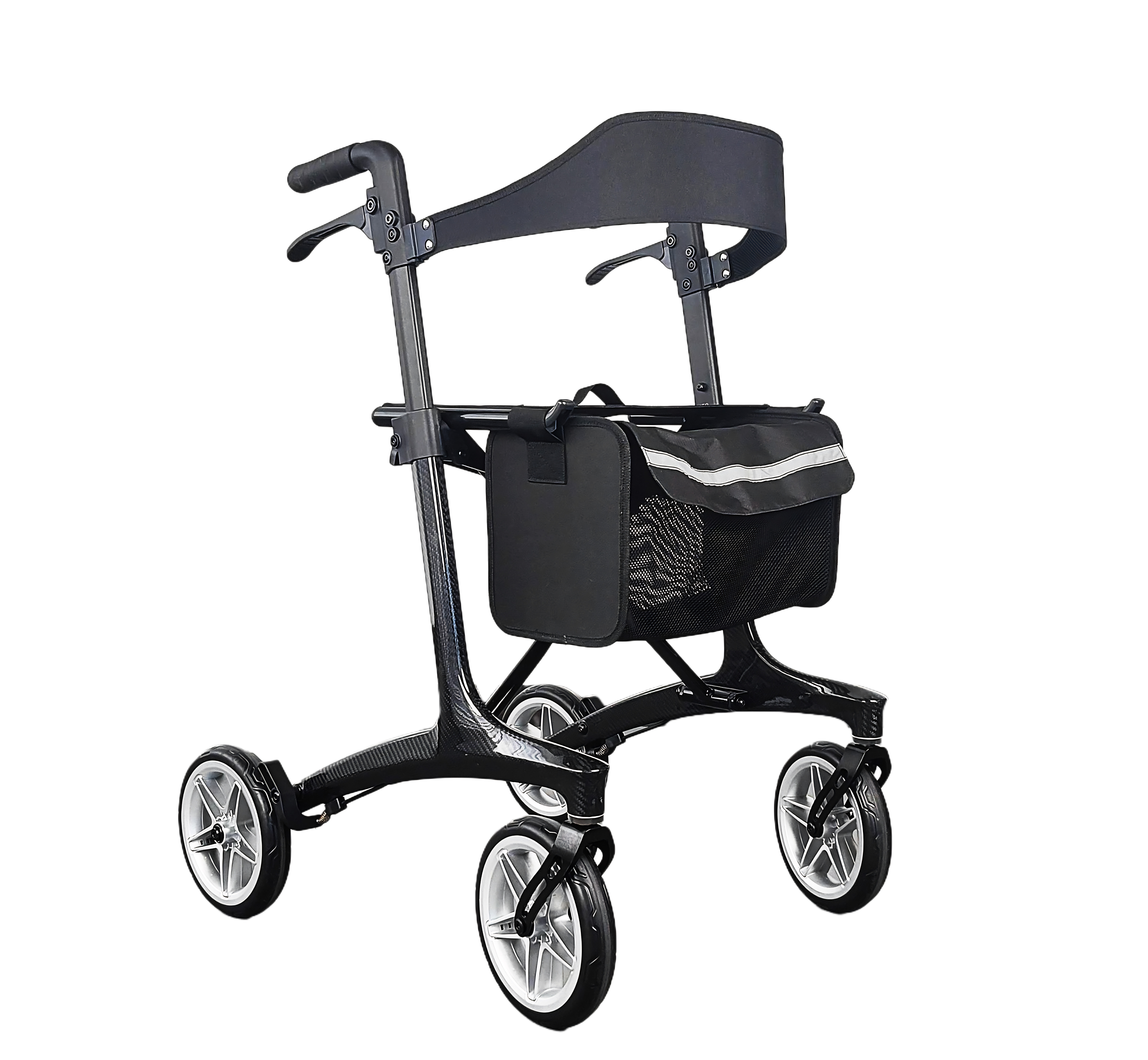
Design Limitations: Why Some Rollators Fail Lightweight Expectations

As mobility devices evolve, one critical area remains under scrutiny—weight. A growing number of product developers and procurement officers are facing challenges where rollators exceed expected weights, limiting user satisfaction and triggering the signs that use a rollator that's too heavy. Understanding where design goes wrong is crucial to avoiding these pitfalls in both product development and procurement workflows.
1. Feature Overload Increases Dead Weight
In efforts to create feature-rich rollators, many manufacturers unintentionally add bulk. Features like dual brakes, oversized baskets, or integrated oxygen holders, while well-intentioned, can turn a 14-pound frame into a 22-pound burden. When users start experiencing the signs that use a rollator that's too heavy, it’s often because added components outpace strength-to-weight balance. A strategic balance between functionality and usability must guide design decisions.
2. Material Misapplication
Choosing steel instead of aluminum, or ignoring carbon fiber alternatives, often stems from cost-reduction targets. However, material misapplication is among the top contributors to user fatigue. Users may experience joint pain, reduced walking range, and limited portability—early the signs that use a rollator that's too heavy. Materials must be chosen for durability and lightness, not one over the other.
3. Poor Weight Distribution in Engineering
Even a moderate-weight rollator may cause stress if its weight isn’t distributed properly. Designers must calculate the balance between front casters, rear wheels, and center of mass. Otherwise, users struggle to lift or maneuver turns, which is another subtle signal that the rollator may be overdesigned and under-ergonomic.
4. No Testing for Lift-Load Suitability
Many prototypes undergo terrain testing or brake calibration—but omit the real-world lift test. Can a senior place it in a trunk alone? Can it be gate-checked at an airport without external help? When that test fails, user compliance drops, and we again see the signs that use a rollator that's too heavy being ignored during product validation. Lift-and-fold simulation testing must be part of every design cycle.
5. Lack of Feedback Loops in the Design Cycle
Finally, insufficient post-market data gathering makes the problem persistent. Users often adapt silently to heavier devices—sacrificing usage time or skipping activities. Without proper feedback channels, designers remain unaware of these compromises. Building long-term feedback into CRM and warranty systems is vital for avoiding recurrence in future models.
Conclusion
Procurement professionals and developers must work together to avoid the costly mistake of sourcing or building rollators that are too heavy for practical use. Knowing the signs that use a rollator that's too heavy and designing with restraint, precision, and testing ensures mobility devices that meet real-world needs—without weighing users down.