





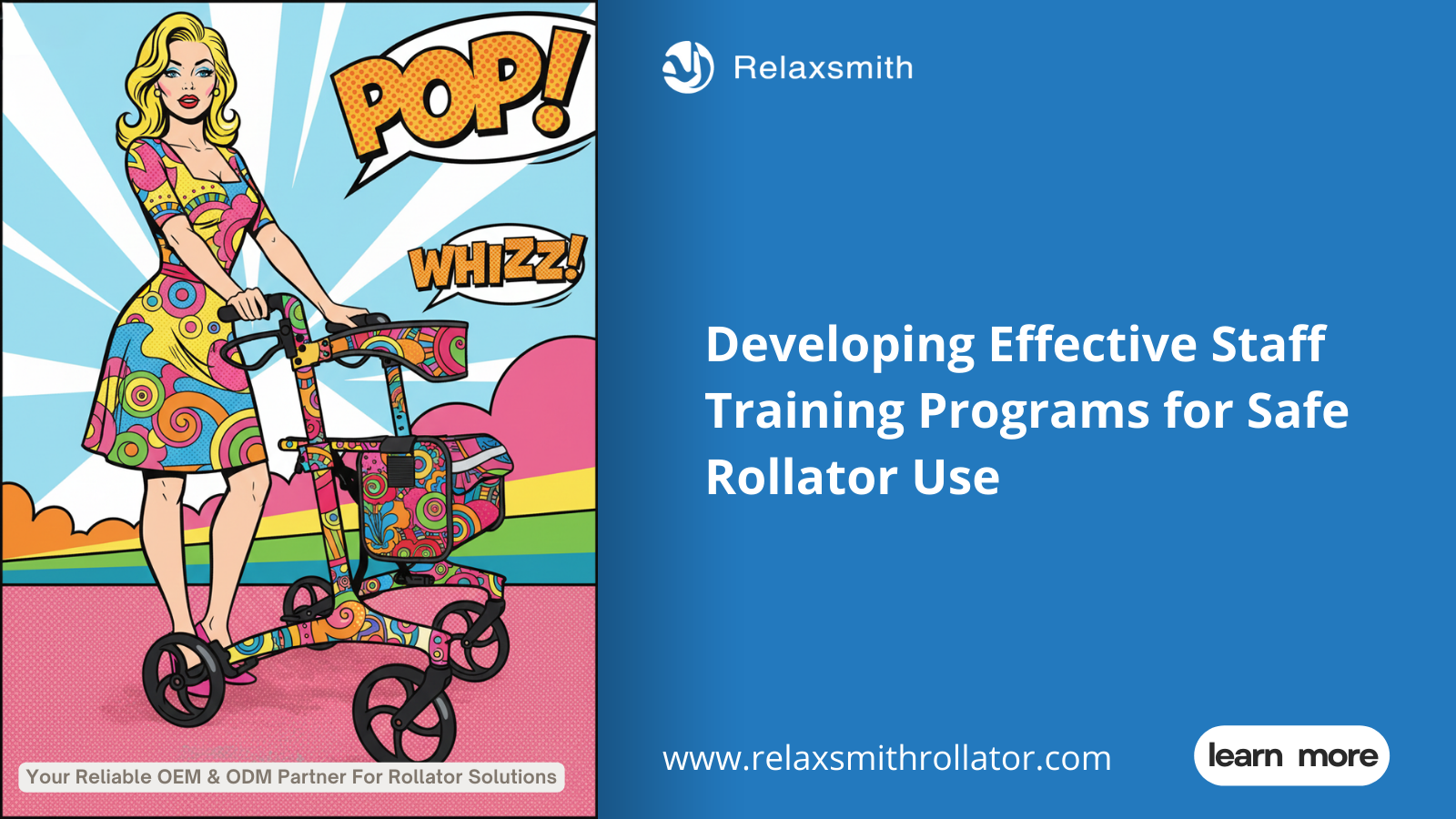
Developing Effective Staff Training Programs for Safe Rollator Use
Robust staff training for rollator safety is crucial for healthcare facilities striving to reduce fall risks and enhance patient independence. This guide outlines five essential dimensions to help clinical and administrative leaders plan, implement, and refine targeted training programs that empower staff to deliver safe, confident rollator support.
1. Needs Assessment and Gap Analysis
Begin with a systematic review of current staff knowledge and skill levels regarding rollator use. Use surveys, direct observation, and incident reports to pinpoint gaps. Involving front-line staff ensures the staff training for rollator is relevant, engaging, and directly aligned with daily care challenges.
2. Curriculum Development and Customization
Design a modular curriculum covering key topics: rollator mechanics, patient assessment, fitting and adjustments, hands-on handling, infection control, and troubleshooting. Integrate scenario-based learning that mirrors real facility environments. Tailor modules for different roles—nurses, therapists, aides—ensuring every staff member masters core staff training for rollator competencies.
3. Hands-On Instruction and Simulation
Move beyond lecture to deliver interactive, hands-on training. Use simulation labs, peer teaching, and competency checklists to reinforce skills. Demonstrate correct and incorrect rollator use, encourage questions, and create a safe space for practice and feedback.
4. Monitoring, Feedback, and Reinforcement
Implement ongoing assessment through quizzes, spot checks, and patient outcome monitoring. Collect staff feedback to improve content and delivery methods. Use success stories, performance dashboards, and regular refresher sessions to maintain high standards and sustain engagement.
5. Continuous Improvement and Scaling
Regularly review training outcomes and incident data to identify opportunities for enhancement. Scale successful programs across departments or locations, adapting for new rollator models or updated protocols. Build a learning culture where staff training for rollator is valued as a driver of clinical quality and patient safety.
For more details, please visit: www.relaxsmithrollator.com