





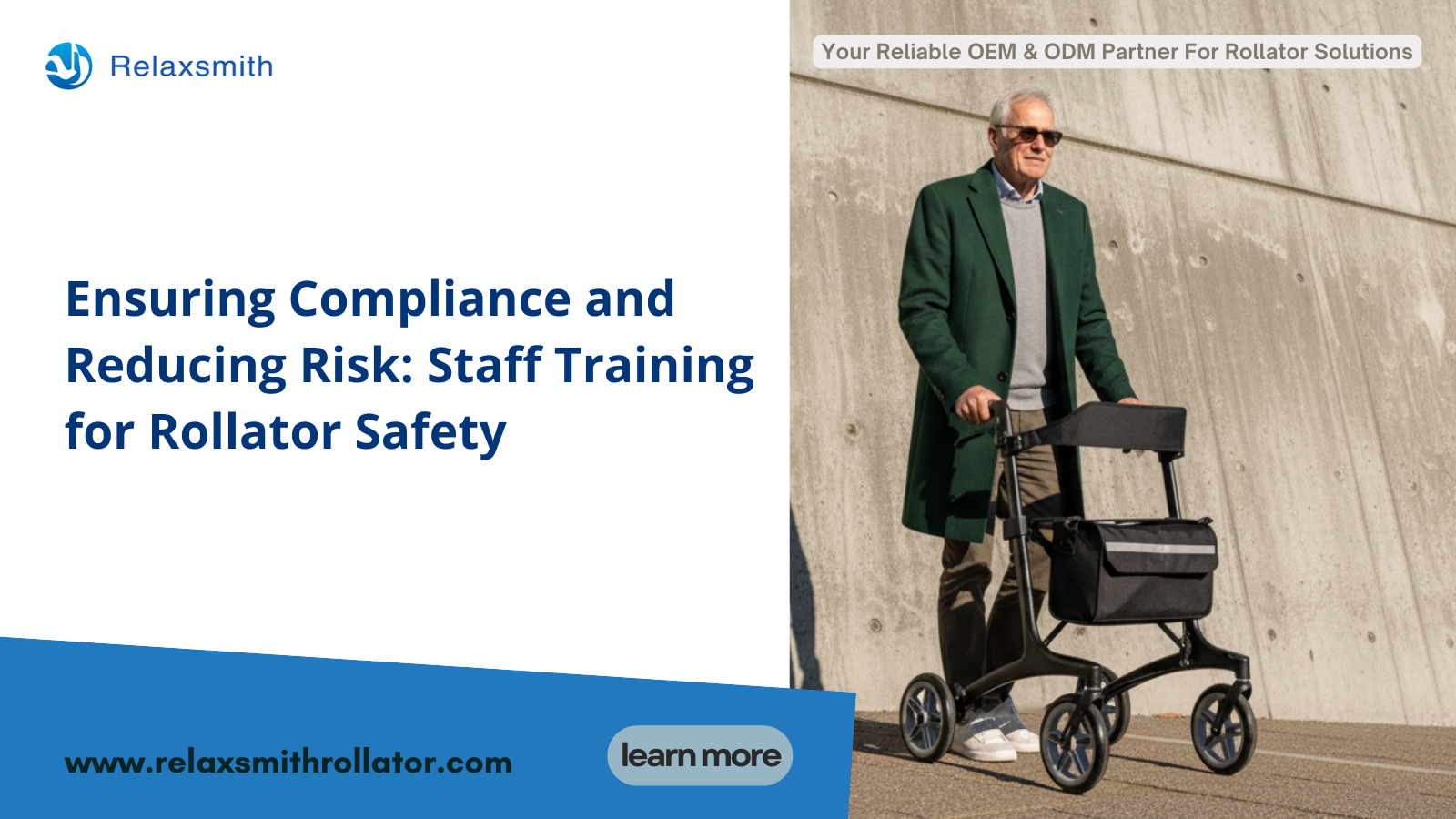
Ensuring Compliance and Reducing Risk: Staff Training for Rollator Safety
Comprehensive staff training for rollator safety is a key pillar of regulatory compliance, risk management, and quality improvement in healthcare. This playbook outlines practical steps for managers to design, document, and scale training programs that minimize liability and maximize patient safety.
1. Aligning Training with Regulatory Standards
Review all applicable national and local standards for mobility aids and staff education. Ensure your staff training for rollator program covers safety checks, transfer techniques, documentation, and infection prevention. Use checklists to verify compliance during internal audits and inspections.
2. Building Robust Documentation and Audit Trails
Maintain detailed records of all training sessions, attendance, competency assessments, and incident reports. Digital systems make it easy to generate audit-ready documentation, supporting accreditation and minimizing legal exposure related to staff training for rollator safety.
3. Continuous Risk Assessment and Improvement
Implement routine risk assessments and analyze incident data to target training updates. Encourage frontline staff to report hazards or near misses. Use findings to refine protocols and preempt potential risks before they escalate.
4. Scalable and Adaptive Training Approaches
Design programs that can be easily updated and deployed across multiple departments or sites. Online modules, microlearning, and refresher sessions keep staff training for rollator content current and responsive to evolving standards and technology.
5. Cultivating a Culture of Accountability and Safety
Promote open communication and recognize staff who demonstrate excellence in rollator safety. Leadership commitment, transparent policies, and visible accountability foster an environment where compliance and risk reduction are daily priorities.
For more details, please visit: www.relaxsmithrollator.com