





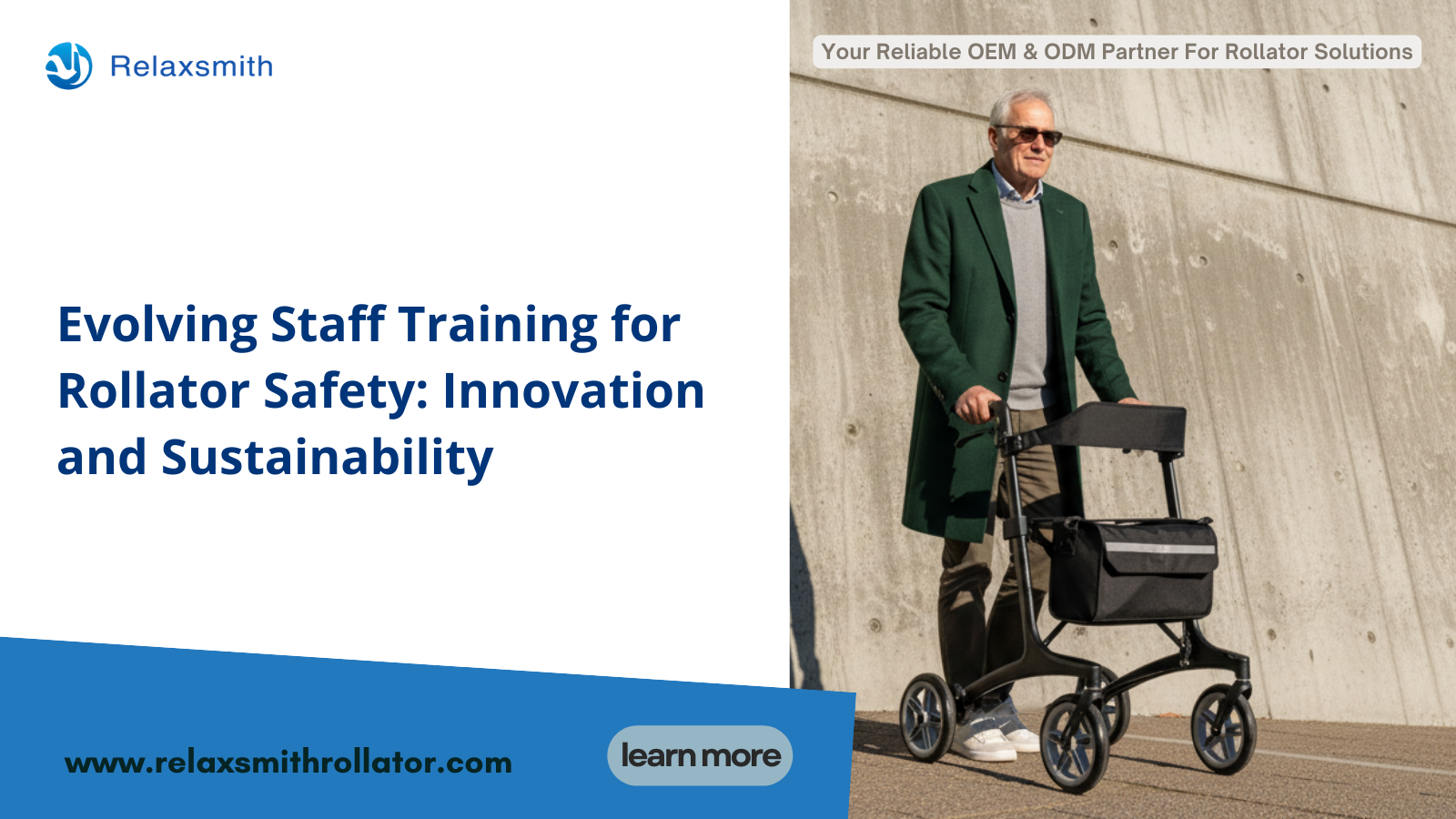
Evolving Staff Training for Rollator Safety: Innovation and Sustainability
Staff training for rollator safety must keep pace with rapid changes in technology, patient demographics, and healthcare standards. Forward-looking managers and educators can future-proof their programs by embracing innovation, robust analytics, and leadership development. This article outlines five advanced strategies for evolving and scaling training programs to maximize impact and sustainability.
1. Embedding Analytics and Feedback in Training Cycles
Leverage analytics to monitor training participation, competency, and clinical outcomes linked to staff training for rollator safety. Real-time dashboards and data-driven reviews help identify gaps, set priorities, and refine content for continuous improvement.
2. Embracing Technological Innovation
Adopt digital learning platforms, mobile microlearning, and VR/AR simulations to make training more accessible and engaging. Partner with rollator manufacturers for updated resources and hands-on demos featuring the latest device models.
3. Cultivating Leadership and Peer Mentoring
Develop leadership pipelines for training champions at all organizational levels. Peer mentoring programs create a culture of shared responsibility and accelerate skill acquisition for new hires and existing staff alike.
4. Sustaining Engagement Through Recognition and Community
Recognize top performers and celebrate team achievements in rollator safety. Establish staff communities of practice—online forums, regular workshops, or roundtable discussions—to share challenges, insights, and best practices.
5. Scaling and Adapting for Organizational Growth
Design training content and infrastructure for easy expansion across sites and departments. Document playbooks, lesson plans, and evaluation tools to support onboarding, cross-training, and compliance as your organization evolves.
For more details, please visit: www.relaxsmithrollator.com



