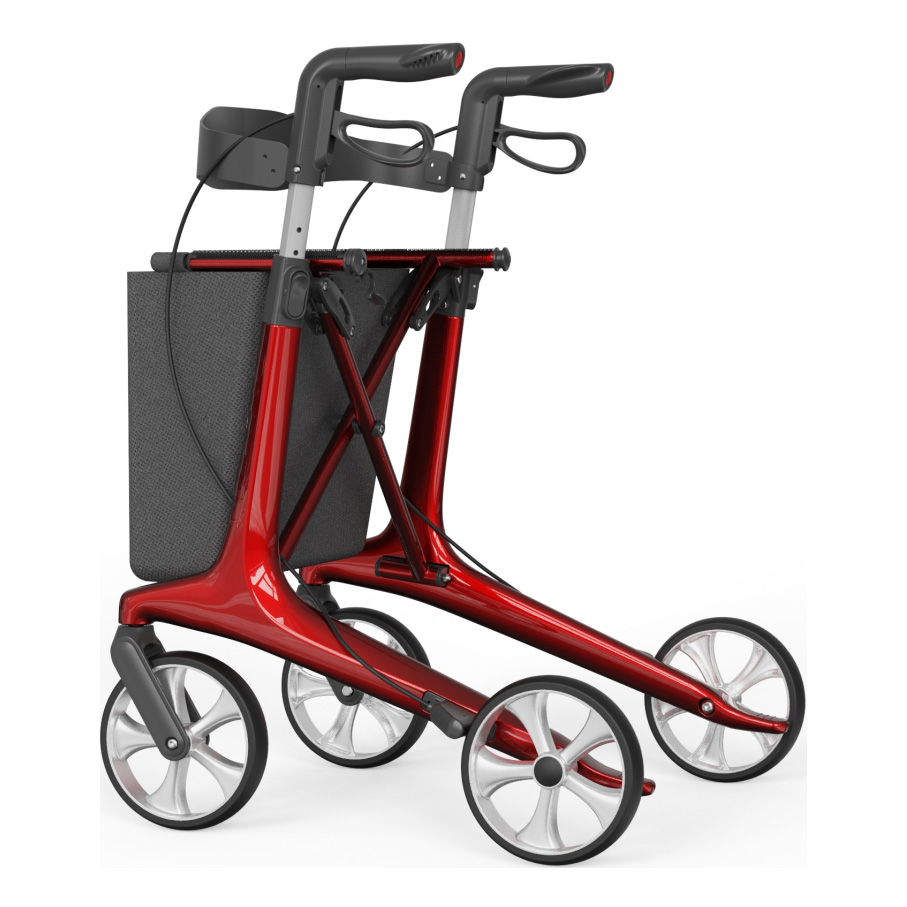
Driving Better Outcomes: Flexible Handrail Walkers in Healthcare Procurement
In modern healthcare procurement, safety and value are non-negotiable. Flexible handrail medical walkers are emerging as best-in-class solutions for hospitals and care facilities seeking to advance patient safety and staff satisfaction. This article provides actionable guidance for procurement teams, focusing on the procurement advantages of medical walkers equipped with flexible handrails in healthcare institutions and how these devices support compliance, patient care, and long-term value.
1. Embedding Safety into Procurement Standards
Procurement teams must require device features that support both patient and staff safety, including:
Flexible, slip-resistant handrail materials for better patient grip and reduced falls
Adjustable and modular components to fit a wide range of patient needs
Certification and test reports verifying device performance in clinical scenarios
Procurement advantages of medical walkers equipped with flexible handrails in healthcare institutions are amplified when safety is a contractual requirement.
2. Supporting User-Centric Adoption and Training
For maximum benefit, procurement must go hand-in-hand with comprehensive user training:
Conduct on-site staff and patient training sessions on device adjustment and usage
Develop user-friendly instruction manuals and video guides
Track and analyze user adoption rates for ongoing improvement
Engaged users not only stay safer—they provide valuable feedback for continuous product improvement.
3. Enhancing Compliance and Risk Management
Reducing procurement risk and ensuring regulatory compliance require diligent oversight. Best practices:
Work with suppliers holding ISO and FDA certifications for all devices
Audit supply chain partners for ethical sourcing and production
Maintain clear documentation of procurement decisions and safety incidents
Transparent and compliant procurement lowers institutional risk and supports sustainable growth.
4. Measuring Value Creation in Healthcare Institutions
Beyond safety, procurement teams must demonstrate value to both clinical and financial stakeholders:
Analyze reduction in patient falls and associated costs post-implementation
Assess staff time savings through workflow efficiency studies
Calculate total cost of ownership over the device lifecycle
The procurement advantages of medical walkers equipped with flexible handrails in healthcare institutions often include measurable ROI and positive patient experience metrics.
5. Partnering for Long-Term Innovation
True procurement leaders cultivate close partnerships with suppliers to drive future innovation:
Engage in co-development projects for next-generation devices
Share feedback and clinical data to guide product upgrades
Set up quarterly review sessions for mutual learning and improvement
Partnerships ensure procurement keeps pace with advances in medical mobility solutions.
Conclusion
To realize enhanced safety and value in assistive device procurement, healthcare teams must align standards, user adoption, compliance, and value tracking with strategic partnerships. The procurement advantages of medical walkers equipped with flexible handrails in healthcare institutions are clear—better outcomes, lower risk, and smarter investment for all stakeholders.
For more details, please visit: https://smartelderlycare.com/
Tags: Elderly mobility support, Mobility support with wheels, Sturdy mobility walker, Lightweight folding aid, Elder walker with comfort grip
SEO Keywords: procurement advantages of medical walkers equipped with flexible handrails in healthcare institutions, enhanced safety and value in assistive device procurement, healthcare procurement best practices, staff training assistive devices, compliance risk management, patient safety outcomes, user-centric adoption, supplier certification, modular walker design, ROI in assistive device procurement, workflow efficiency healthcare, clinical value analysis, cost of ownership medical walkers, supplier partnership innovation, procurement documentation, ethical sourcing medical devices, regulatory compliance assistive devices, product improvement feedback, safety incident tracking, total cost analysis procurement, ISO certification healthcare, FDA compliance walkers, risk mitigation healthcare procurement, clinical performance procurement, co-development medical devices, long-term supplier partnership, assistive device innovation, healthcare ROI analysis, procurement measurement, device user guides, patient experience metrics