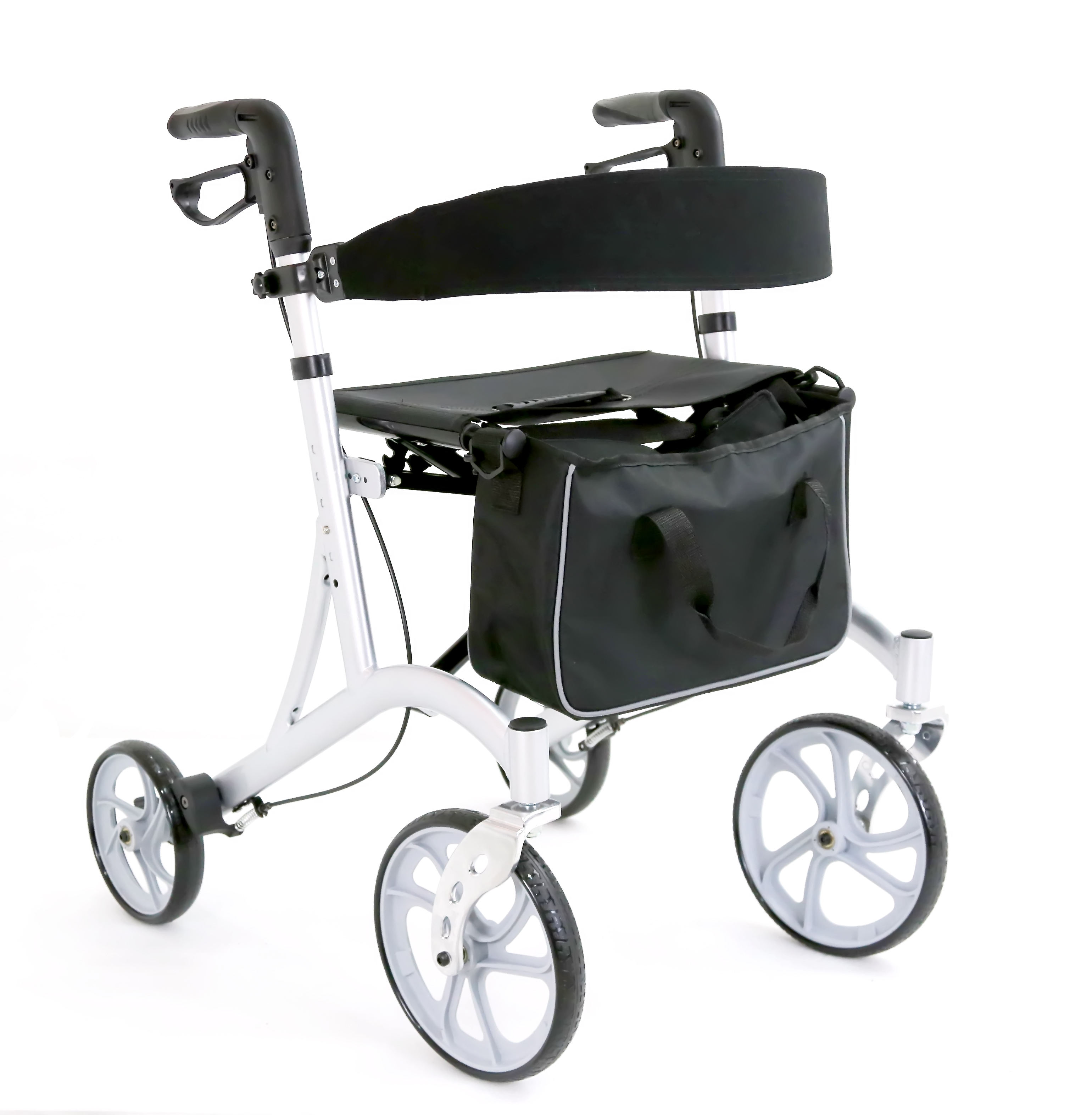
Ergonomic Rollators in Modern Healthcare Supply Chains
How Innovation in Rollator Design Shapes Global Procurement and Production
Introduction: When Design Meets Supply Chain Strategy
The integration of ergonomic design into rollator manufacturing has reshaped not only product usability but also the entire healthcare supply chain.
As hospitals, clinics, and distributors demand mobility aids that offer greater comfort, safety, and sustainability, supply chain managers must adapt to a new paradigm where product innovation directly influences procurement and production efficiency.
From Traditional Manufacturing to Ergonomic Innovation
Traditional rollator production emphasized mass efficiency — steel frames, standard molds, and fixed geometries.
Ergonomic models, in contrast, use adaptive materials and modular components, demanding precision tooling and tighter supplier collaboration.
This shift marks a transformation from high-volume production to precision-driven, data-informed workflows.
Procurement Challenges and Opportunities
Procurement departments must balance cost, compliance, and innovation.
Sourcing carbon composites, magnesium alloys, or ergonomic polymers introduces higher standards of quality control but positions suppliers for high-value contracts.
Compliance with ISO 13485 and RoHS standards has become essential to maintain trust in international healthcare markets.
Supply Chain Optimization for Ergonomic Rollators
Modern healthcare supply chains now rely on modular design and digital monitoring.
Using blockchain or RFID tagging enhances traceability, while lean manufacturing reduces material waste and lead times.
Localizing key component suppliers can improve resilience and cost stability in global logistics.
Role of Product Managers
Product managers now act as cross-functional leaders, integrating R&D, design, and supplier performance.
Data analytics and feedback loops guide decisions on material sourcing and design refinement, reducing error rates and improving post-market reliability.
Conclusion: Building the Future of Healthcare Mobility
Ergonomic rollators embody a convergence of design, efficiency, and sustainability.
As demand grows for user-centered, eco-friendly healthcare solutions, companies that align design excellence with agile supply chains will dominate the market.
The future belongs to organizations that see the rollator not as a commodity — but as a platform for healthcare innovation.
SEO Keywords (40 sets)
ergonomic rollator manufacturing, healthcare supply chain innovation, medical device logistics, rollator production efficiency, aluminum frame rollator, carbon composite walker, modular healthcare design, sustainable mobility equipment, ergonomic walker procurement, supply chain optimization healthcare, industry 4.0 in medical devices, lean manufacturing healthcare, advanced rollator assembly, medical equipment sourcing, ergonomic healthcare product strategy, traceable mobility device, procurement innovation healthcare, carbon fiber production, hospital equipment supply, product manager healthcare innovation, ergonomic material sourcing, quality control in medical devices, adjustable walker technology, healthcare production trends, lightweight ergonomic rollator, digital twin in manufacturing, medical procurement strategy, ergonomic device compliance, ISO 13485 rollator, smart healthcare logistics, healthcare cost optimization, advanced healthcare R&D, ergonomic product testing, mobility aid market trends, patient comfort engineering, sustainable healthcare sourcing, ergonomic rollator lifecycle, supply chain digitization, medical equipment certification, healthcare production management.
Tags (20 sets)
ergonomic rollator, healthcare supply chain, product management, lean manufacturing, carbon fiber rollator, aluminum walker, sustainable healthcare, procurement strategy, mobility innovation, medical equipment, hospital procurement, product optimization, healthcare logistics, ergonomic product design, supply chain agility, modern healthcare equipment, lightweight mobility aid, quality management, industrial innovation, ergonomic device sourcing.
READ MORE: