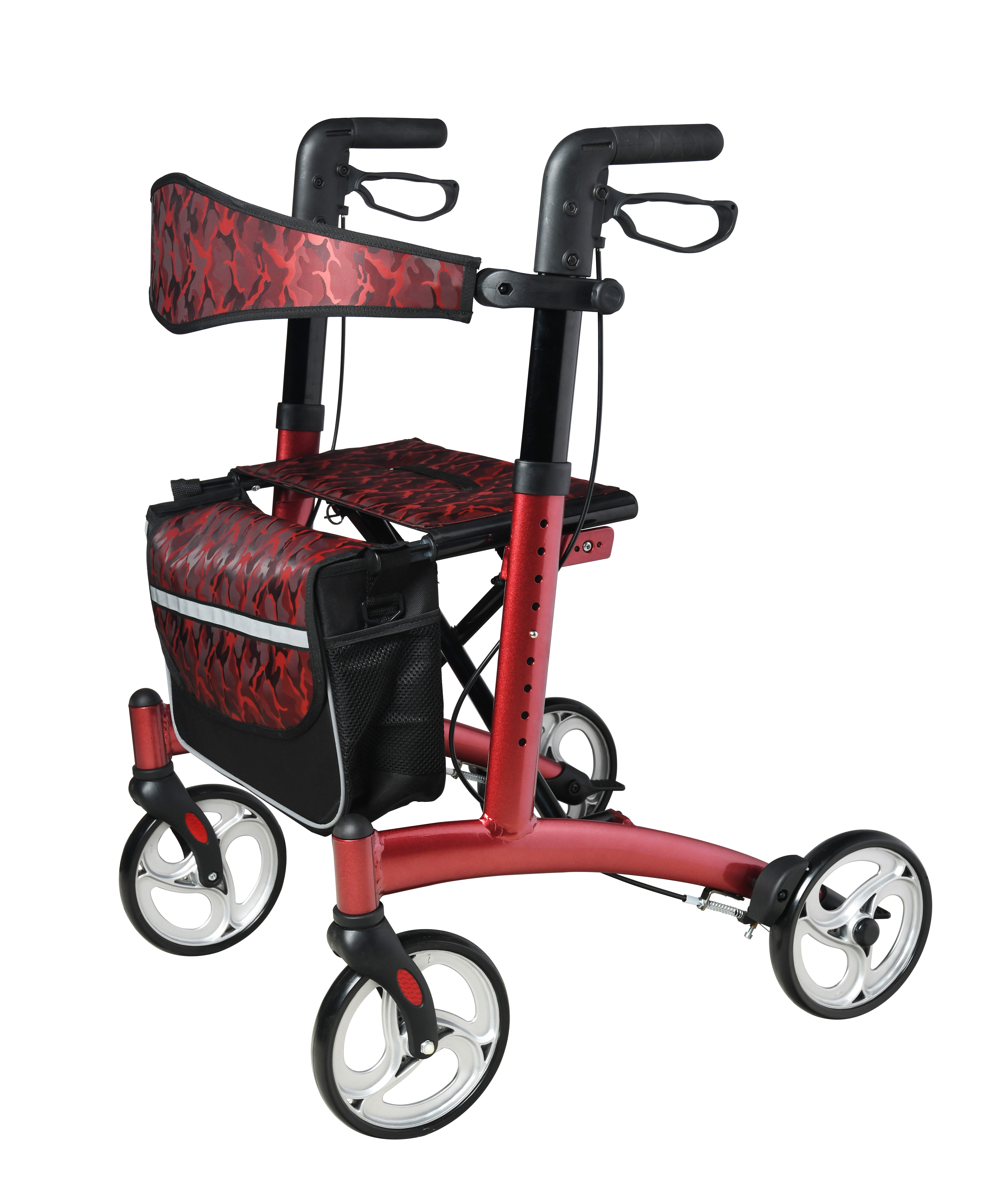
Quantifying the Added Value of Flexible-Armrest Walkers in Clinical Environments
Flexible-armrest walkers are gaining traction in clinical environments due to their potential to improve patient outcomes and enhance staff efficiency. For procurement teams, quantifying the added value of these specialized medical walkers in healthcare facilities is crucial to achieving optimal investment and supporting superior care delivery. This article provides actionable strategies to accurately measure and communicate the procurement benefits of medical walkers with flexible armrests in clinical settings.
1. Identifying Clinical Impact Variables
Begin by mapping out clinical variables that flexible-armrest walkers influence: patient comfort, support during ambulation, reduction in fall risk, adaptability for various patient types, and ease of staff handling. Clear variable identification grounds the procurement benefits of medical walkers with flexible armrests in healthcare facilities in measurable outcomes.
2. Collecting Quantitative and Qualitative Evidence
Gather clinical studies, staff feedback, patient satisfaction scores, and safety reports related to the use of flexible-armrest walkers. Quantitative metrics (fall reduction rates, mobility improvements) and qualitative testimonials both play critical roles in value assessment.
3. Calculating Cost Savings and Operational Gains
Analyze how flexible-armrest walkers contribute to reduced injury rates, shorter rehabilitation periods, and increased staff efficiency. Translate these operational improvements into tangible cost savings for healthcare facilities.
4. Benchmarking Against Conventional Walkers
Conduct direct comparisons with conventional walker models. Examine where flexible-armrest designs deliver superior outcomes—such as reduced patient fatigue, fewer adjustments, or better compatibility with clinical workflows.
5. Presenting the Business Case to Stakeholders
Build compelling business cases for procurement by synthesizing clinical impact, operational gains, and cost savings. Use data visualization and summary dashboards to communicate procurement benefits of medical walkers with flexible armrests in healthcare facilities to leadership and cross-functional teams.
Conclusion
Quantifying the added value of flexible-armrest walkers requires an evidence-based, multi-dimensional approach. By combining clinical data, cost analysis, and stakeholder input, procurement teams can drive smarter, patient-centered purchasing decisions in healthcare facilities.
For more details, please visit: https://smartelderlycare.com/
Tags: Procurement Benefits of Medical Walkers with Flexible Armrests in Healthcare Facilities, Clinical impact, Cost savings, Operational efficiency, Staff feedback, Patient safety, Evidence-based procurement, Business case, Clinical workflow, Patient comfort
SEO Keywords: Procurement Benefits of Medical Walkers with Flexible Armrests in Healthcare Facilities, Flexible-armrest walker clinical value, Medical walker patient safety, Flexible walker cost savings, Clinical impact walker, Staff efficiency walker, Procurement healthcare facility, Evidence-based walker procurement, Medical walker operational gain, Flexible-armrest walker benchmark, Patient comfort walker, Procurement stakeholder business case, Medical walker visualization, Walker value measurement, Flexible walker staff feedback, Healthcare facility procurement, Patient satisfaction walker, Flexible walker rehabilitation, Medical walker comparison, Flexible walker data dashboard, Flexible walker purchasing decision, Healthcare workflow walker, Medical walker outcome, Flexible walker leadership presentation, Procurement multi-dimensional value, Flexible walker injury reduction, Walker procurement strategy, Healthcare procurement analysis, Walker patient-centered procurement, Flexible walker testimonial, Medical walker safety report, Flexible walker compatibility, Procurement quantitative analysis, Walker qualitative evidence, Clinical study walker, Flexible walker procurement case, Healthcare procurement improvement, Patient fatigue reduction, Walker staff handling, Flexible walker adaptation, Medical walker operational improvement